

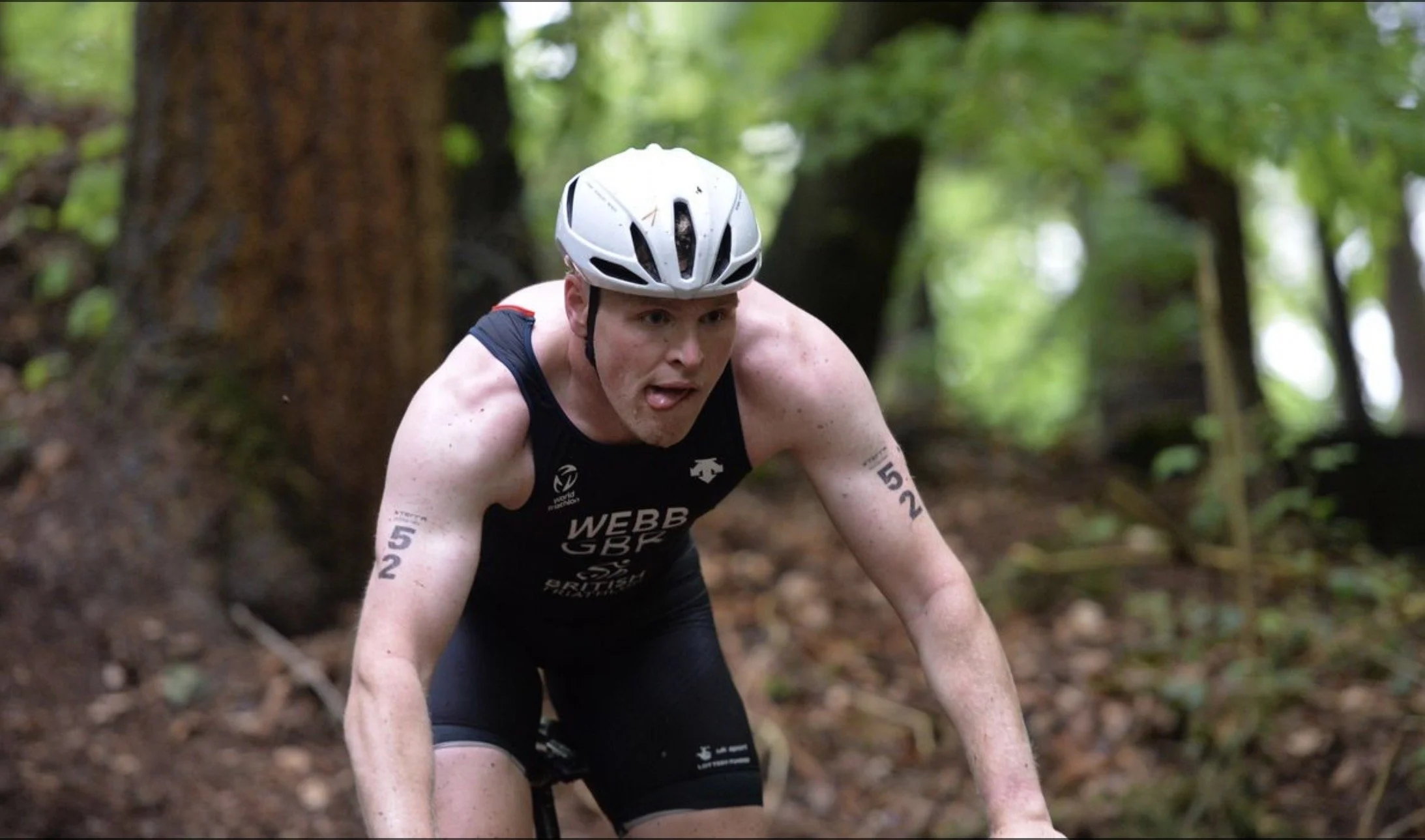
The Mental Side of Racing at an Elite Age Group Level
Getting physically fit enough to compete at an elite age group level is only half the challenge. The ability to manage nerves, expectations, pressure, setbacks and race-day decisions can determine whether you perform at your potential. Here's how to develop the mental skills required to race at your best.
You've done the training.
You've completed the long rides.
You've endured the intervals.
You've swum thousands of metres.
You've put the miles into your legs.
Your fitness is there.
So why can racing still feel so difficult?
Because once you reach a high level of age-group competition, fitness isn't the only thing being tested.
Your mindset is being tested too.
The pressure of racing for a qualifying position.
The expectation of a personal best.
The fear of having a bad race.
Watching the athlete next to you.
Seeing your competitors' numbers on Strava.
Knowing that you've spent months preparing for one particular day.
At an elite age-group level, these psychological factors can have a huge influence on performance.
And sometimes, the difference between a great race and a disappointing one isn't fitness.
It's how well you manage your mind when the race doesn't go exactly to plan.
What Does "Elite Age Group" Actually Mean?
Elite age-group racing doesn't necessarily mean you're a professional.
It means you're competing at a level where relatively small differences in performance can have significant consequences.
You might be racing for:
British Age Group qualification
A podium position
A personal best
World or European Championship qualification
A highly competitive age-group placing
At this level, you can't simply rely on being fitter than everyone else.
You need to execute.
And execution requires mental control.
The Pressure Changes as You Get Faster
When you're completing your first triathlon, the objective might simply be:
Finish.
Then it becomes:
Finish faster.
Then:
Break a certain time.
Then:
Qualify.
Eventually:
Win or podium.
As your goals become more ambitious, the psychological pressure often increases.
Suddenly, a race isn't just a race.
It's the result of months of sacrifice.
That's where athletes can become trapped by expectations.
The Fear of Failure
One of the biggest psychological challenges for high-level age-group athletes is fear of failure.
You've trained hard.
You've sacrificed weekends.
You've structured your life around training.
You've invested in equipment, coaching, travel and racing.
You know you're capable of performing well.
But what if you don't?
This fear can influence how you race.
You may:
Start too hard
Chase competitors unnecessarily
Ignore your pacing plan
Panic when your numbers aren't where you expect
Take unnecessary risks
Ironically, the fear of having a bad race can actually contribute to having one.
Stop Racing the Result
This is one of the most important lessons an athlete can learn.
You cannot control your finishing position.
You cannot control what another athlete does.
You cannot control the weather.
You cannot control mechanical failures.
You cannot control every variable on race day.
But you can control your execution.
Instead of thinking:
"I need to qualify."
Focus on:
"I need to execute my race plan."
That might mean:
Swimming efficiently
Staying controlled early on the bike
Fueling consistently
Holding your target effort
Running your own pace
Control the process.
Let the result take care of itself.
Don't Let the Swim Decide Your Race
The swim is often where anxiety is highest.
Especially in a highly competitive field.
Athletes can become obsessed with:
Getting onto the right feet
Losing contact
Being dropped
Their swim time
The result?
They go far harder than planned.
Then they spend the next several hours paying for it.
A strong athlete understands that the swim is part of the race—not the race itself.
The objective is to swim efficiently and position yourself appropriately without allowing adrenaline to dictate your effort.
Learn to Stay Calm When Things Go Wrong
Almost every experienced triathlete eventually learns this:
Something will go wrong.
Maybe your goggles leak.
Maybe you miss your bottle.
Maybe you have a poor transition.
Maybe your power meter stops working.
Maybe your stomach doesn't feel right.
Maybe you get caught behind a group.
The athletes who perform best aren't necessarily the ones who avoid problems.
They're the ones who respond well to them.
Instead of:
"My race is ruined."
Think:
"What's the next controllable action?"
That simple change in thinking can completely alter your race.
Don't Chase Someone Else's Race
This is particularly important in age-group racing.
You see an athlete riding strongly.
You think:
"I need to stay with them."
You increase your effort.
Five minutes later, you're above your planned intensity.
Twenty minutes later, you're accumulating unnecessary fatigue.
An hour later, you're wondering why your legs feel terrible.
Race your own numbers.
Race your own plan.
Race your own competition.
Your competitors don't know what your optimal race strategy is.
You do.
Confidence Comes From Preparation
Confidence isn't simply telling yourself:
"I'm going to win."
Real confidence comes from evidence.
You've completed the training.
You've practised race pace.
You've tested your nutrition.
You've handled difficult sessions.
You've dealt with bad days.
You've built the fitness.
That creates genuine confidence.
The goal isn't to convince yourself that nothing can go wrong.
It's to know that you can handle it if something does.
Your Training Should Prepare Your Mind Too
Mental preparation shouldn't begin on race morning.
Your training should include opportunities to practise:
Race pacing
Nutrition
Difficult conditions
Fatigue management
Race-specific intensity
Running off the bike
You should occasionally practise being uncomfortable without panicking.
This creates familiarity.
When race day arrives, difficult moments don't feel completely unexpected.
You've already experienced them.
The Final 10% of the Race
Mental strength becomes particularly important when fatigue is high.
The final kilometres of an Ironman or 70.3 can be extremely challenging.
At this point, motivation can disappear.
Your brain starts looking for reasons to slow down.
This is where having simple mental cues can help.
Instead of thinking about the remaining distance:
Focus on the next kilometre.
Instead of:
"I have 15 km left."
Think:
"Get to the next aid station."
Break the race into manageable pieces.
Develop Your Own Race-Day Mantra
A simple phrase can help during difficult moments.
Examples include:
"Stay controlled."
"Trust the process."
"One kilometre at a time."
"Relax and move forward."
"This is supposed to be hard."
The phrase itself doesn't matter.
What matters is having something simple that brings you back to the task.
Don't Obsess Over Your Watch
Technology is incredibly useful.
But it can also become a psychological trap.
You look down.
Your power is 8 watts below target.
You panic.
You increase your effort.
Then you're suddenly riding above target.
The same can happen with pace and heart rate.
Data should inform your decisions.
It shouldn't control your emotions.
Learn to interpret numbers within context.
Learn to Trust Your Training
One of the hardest things for athletes is accepting that the work is already done.
The week before the race isn't the time to suddenly become fitter.
You can't cram months of training into seven days.
The final stage of preparation is about arriving ready to perform.
Trust the process.
Trust your preparation.
Trust your race plan.
The Difference Between Confidence and Arrogance
Confidence says:
"I'm prepared to perform."
Arrogance says:
"I can't lose."
These are completely different mindsets.
A confident athlete respects the competition while remaining focused on their own execution.
They don't underestimate the race.
They don't fear it either.
They simply do their job.
What Happens After a Bad Race?
This is where elite age-group athletes can really develop.
A poor race isn't necessarily a failure.
It can be information.
Ask:
What went wrong?
Was it physical?
Was it tactical?
Was it nutritional?
Was it psychological?
Did I execute the plan?
What can I change?
Don't turn one bad result into an identity.
You are not a bad athlete because you had a bad race.
Learn.
Adapt.
Move forward.
Your Coach Can Help With the Mental Side Too
A coach's role isn't simply to prescribe workouts.
At a high level, coaching also involves helping athletes manage the psychological side of competition.
That can mean:
Keeping expectations realistic
Building confidence
Reviewing race performances objectively
Preventing emotional training decisions
Helping develop race strategies
Preparing for difficult scenarios
Sometimes athletes don't need more motivation.
They need perspective.
Why Frederick Webb Triathlon Understands the Demands of High-Level Racing
At Frederick Webb Triathlon, coaching is built around developing the complete athlete.
Physical preparation is obviously important.
But successful racing also requires:
Confidence.
Discipline.
Patience.
Decision-making.
Composure.
As a professional triathlete and coach, Frederick understands that racing at a high level isn't simply about having the highest fitness.
It's about being able to use that fitness when it matters.
Your training should prepare you not only to reach the start line fit—but to execute when the pressure is on.
Five Mental Rules for Elite Age Group Racing
If you remember nothing else from this article, remember these:
1. Race your plan
Don't let another athlete dictate your pacing.
2. Control what you can control
Focus on your effort, nutrition, pacing and decisions.
3. Expect problems
Something will probably go wrong. Be ready to adapt.
4. Trust your preparation
You've done the work. Let your training come through.
5. Focus on execution, not outcome
The result is a consequence of what you do throughout the race.
Final Thoughts
At an elite age-group level, everyone on the start line is fit.
The difference between athletes can become incredibly small.
That's why the mental side of racing matters so much.
The ability to remain calm.
The ability to stick to a pacing plan.
The ability to fuel when you don't feel like eating.
The ability to respond when something goes wrong.
The ability to keep pushing when the race becomes uncomfortable.
These are skills.
And like physical skills, they can be developed.
You don't need to eliminate nerves.
You need to learn how to perform despite them.
You don't need to guarantee a perfect race.
You need to be prepared to respond when it isn't perfect.
And you don't need to obsess over the result.
You need to execute the process.
Because when you've trained for months to perform on one day, the strongest athlete isn't always the one with the biggest engine.
Sometimes it's the athlete who can stay calm, trust their preparation and make the right decisions when everyone else starts to panic.
At Frederick Webb Triathlon, we don't just prepare athletes to complete races.
We prepare athletes to perform.
If you're chasing a personal best, British Age Group qualification, a podium, or your biggest triathlon goal yet, personalised coaching can help you develop the physical and mental preparation required to give yourself the best possible chance.
Train smart. Race with confidence. Perform when it matters.
FAQ: Elite Age Group Triathlon Racing
How do I deal with nerves before a triathlon?
Nerves are normal, particularly before important races. Rather than trying to eliminate them, use a consistent pre-race routine and focus on controllable actions such as pacing, nutrition and execution.
How can I improve my confidence before a race?
Confidence comes from preparation. Review successful training sessions, practise your race strategy and remind yourself of the work you've completed.
How do I avoid starting a race too fast?
Have clear pacing targets and mental cues for the opening section of each discipline. Remember that adrenaline can make a controlled pace feel easier than it actually is.
What should I do if something goes wrong during a race?
Don't focus on the mistake. Identify the next controllable action and move forward. Experienced racers aren't those who never encounter problems—they're those who respond effectively.
How important is mental strength in triathlon?
Mental skills become increasingly important as competition gets closer. At high age-group levels, physical differences can be relatively small, making pacing, decision-making, confidence and composure particularly valuable.