


Race Selection Could Be the Difference Between Qualifying and Missing Out
Qualifying for an age group championship isn't only about how fast you are. Choosing the right race, course, conditions and timing can make a huge difference to your chances of qualification.
When athletes decide they want to qualify for an age group championship, the first thing they usually think about is training harder.
More miles.
More intervals.
More swimming.
More threshold work.
But there is another factor that can have a huge influence on your chances of qualifying:
Where and when you choose to race.
Two athletes with almost identical fitness can achieve very different results simply because they chose different qualifying races.
That doesn't mean looking for an "easy" race.
It means being strategic.
If qualifying for an age group championship is a serious goal, your race calendar should be built around that objective rather than simply entering races because they look exciting.
What Is Age Group Qualification?
Age group qualification allows amateur athletes to represent their country at international championship events, competing against athletes in their specific age category.
Depending on the championship and governing body, qualification can involve factors such as:
Finishing position
Age-group placing
Qualification times
Qualification standards
Race-specific criteria
The number of qualification places available
The exact qualification system can change between events, so athletes should always check the current rules for the championship they are targeting.
But regardless of the qualification system, one principle remains:
You need to give yourself the best possible opportunity to perform on the day.
And that starts long before race morning.
1. Don't Just Pick the Race Everyone Else Is Doing
One of the biggest mistakes I see is athletes automatically entering the most popular race.
It makes sense.
Everyone is talking about it.
Your training partners are racing.
You recognise the course.
There is a big atmosphere.
But popularity doesn't necessarily make a race your best qualification opportunity.
A race with hundreds of athletes in your age group may provide significantly more competition for the available qualification positions than a smaller event.
That doesn't mean you should avoid strong competition.
You should understand what you're entering.
Before committing to a race, investigate:
Previous results
Previous qualification times
Number of athletes in your age group
Typical winning and qualification performances
Course characteristics
Weather conditions
Number of qualification slots available
Your goal is to understand the environment in which you're going to compete.
2. Study Previous Results
One of the most useful tools available to an athlete is historical race data.
Look at previous editions of the event.
Ask:
What does it normally take to qualify?
Don't just look at the winning time.
Look at the depth of the age group.
For example, imagine two races.
Race A
Your age group:
80 athletes
Typical qualification performance:
Top 10
Previous 10th place:
4:52
Race B
Your age group:
35 athletes
Typical qualification performance:
Top 5
Previous 5th place:
4:55
On paper, Race A may look more prestigious.
But Race B could potentially provide a more favourable qualification opportunity.
This is why data should influence race selection.
3. Understand the Course
Not every course suits every athlete.
This is incredibly important.
You might be an excellent cyclist but struggle on a technical bike course.
You might be a strong runner but lose your advantage on a hilly run.
You might be an exceptional swimmer but race somewhere where the swim is frequently shortened or cancelled because of conditions.
Your strengths should influence your race selection.
Ask yourself:
Where can I maximise my strengths?
If you're a strong climber, a hilly bike course might suit you.
If you're a powerful swimmer and cyclist, a non-drafting race with a challenging bike course may allow you to create significant gaps.
If you're an exceptional runner, a fast, flat run course may give you the opportunity to gain positions late in the race.
The best course isn't necessarily the fastest course.
It's the course that best suits your physiology, skills and race strategy.
4. Consider the Weather
Weather can completely change a race.
Some athletes thrive in heat.
Others perform significantly better in cooler conditions.
Wind can transform a bike course.
Rain can change technical descents.
Extreme temperatures can make pacing and hydration much more important.
If you know your strengths and weaknesses, consider the typical conditions at different races.
For example:
Strong in heat?
A warmer race could play into your hands.
Poor heat tolerance?
A cooler location or earlier-season race may be more appropriate.
Strong cyclist in windy conditions?
A notoriously exposed bike course might create opportunities.
Weather isn't predictable, but historical conditions can still help inform your decision.
5. Timing Your Qualification Race Properly
Race selection isn't just about the event.
It's also about when it sits within your season.
You need to arrive at your qualification race with the right combination of:
Fitness
Recovery
Freshness
Race experience
Confidence
Training consistency
Trying to qualify after a long block of racing may leave you carrying fatigue.
Likewise, qualifying too early could mean you haven't developed enough fitness.
For many athletes, the ideal approach is to identify the qualification race months in advance and build the season around it.
Everything else becomes preparation.
6. Don't Race Every Weekend Before Your Qualifier
This is another common mistake.
Athletes sometimes believe racing frequently will make them better racers.
It can help with experience.
But racing is also stressful.
Travel.
Poor sleep.
Reduced training.
Recovery.
Nutrition disruption.
Mental fatigue.
If qualification is your primary objective, you need to protect the weeks leading into the event.
Your qualification race should be treated differently from a normal race.
You aren't simply turning up to see what happens.
You're building towards a performance.
7. Use Smaller Races as Preparation
Not every race needs to be a qualification attempt.
A smart season can include smaller races that allow you to practise:
Pacing
Transitions
Nutrition
Race-day routines
Open-water starts
Overtaking
Bike handling
Running off the bike
Tactical decision-making
These races can provide valuable information without requiring you to be at peak fitness.
Think of them as rehearsals.
Then when your qualification race arrives, you've already experienced many of the situations you're likely to encounter.
8. Don't Chase a Qualification Time If Qualification Is Position-Based
This is an important distinction.
Some athletes become obsessed with a particular finishing time.
But if qualification is determined primarily by position, your objective should be to race the athletes around you, not simply hit a number on your watch.
You could produce your fastest-ever race and still miss qualification.
Equally, you could have a slower-than-expected day and qualify comfortably.
Conditions, course and competition all influence finishing times.
If the qualification system is position-based:
Race the race.
Don't race the clock.
9. Understand the Strength of Your Age Group
Some age groups are brutally competitive.
Others may have significantly fewer athletes.
You need to understand where you sit within your category.
Look at previous results and identify:
Typical top-3 performances
Typical qualification performances
Number of athletes
Athletes who regularly qualify
Your current predicted performance
This gives you a realistic benchmark.
You don't need to be the fastest athlete in the country.
You need to be fast enough to earn one of the available places.
That is a very different objective.
10. Build Your Season Around One Main Goal
If qualification matters to you, don't treat it as another item on a long list.
Choose your A race.
Then structure the season around it.
Your calendar could look something like:
Early Season
Training + low-pressure racing
Mid Season
Build fitness + race-specific preparation
Pre-Qualification
Specific race preparation + controlled racing
Qualification Race
Peak performance
Post-Qualification
Recovery + next objective
This gives your training direction.
Instead of constantly chasing fitness, you're building towards a specific performance.
The Biggest Mistake: Trying to Out-Train Poor Race Selection
This is something I regularly emphasise with athletes.
You can spend six months becoming fitter, stronger and faster.
But if you choose a race that doesn't suit you, arrive fatigued, or fail to understand the competitive environment, you may not get the result your fitness deserves.
Fitness gets you into the conversation. Race strategy helps you finish the job.
That doesn't mean manipulating the system or avoiding competition.
It means making informed decisions.
How a Coach Can Help With Race Selection
Race selection is one of the areas where individual coaching can provide significant value.
A coach can help assess:
Your current performance level
Your age-group competition
Previous qualification results
Course profiles
Your strengths and weaknesses
Your training timeline
Your recovery requirements
Race calendar conflicts
Appropriate preparation races
Taper strategy
Race-day pacing and nutrition
The goal isn't simply to tell you which race to enter.
It's to create a qualification strategy.
At Frederick Webb Triathlon, the aim is to build your training and racing around your individual goal rather than giving you a generic plan and hoping it works.
Your Qualification Race Should Be a Strategic Decision
If qualifying for an age group championship is something you genuinely want to achieve, don't leave race selection until the last minute.
Start with the goal.
Then work backwards.
What performance do you need?
Which races give you the best opportunity to produce it?
What course suits you?
How competitive is your age group?
When can you realistically peak?
Which races should you use as preparation?
These questions can completely change how you approach your season.
Because sometimes the difference between qualifying and missing out isn't another 10 hours of training.
It is making better decisions.
Final Thoughts
Qualifying for an age group championship is rarely about one single factor.
You need fitness.
You need consistency.
You need good race execution.
You need resilience.
And you need to give yourself the best possible opportunity to perform.
Race selection is part of performance.
Don't simply choose the race that looks the most exciting.
Choose the race that gives you the best opportunity to demonstrate the fitness you've spent months building.
Train hard.
Train intelligently.
Race strategically.
And give yourself the best possible chance of hearing those words:
You've qualified.
Frequently Asked Questions
What is the best triathlon race for age group qualification?
There isn't one universally best race. The ideal event depends on your age group, current performance, strengths, course preferences, competition and the qualification criteria for the championship.
Should I choose a race with fewer competitors?
Not necessarily. A smaller field may change the competitive dynamics, but you should focus on the actual qualification criteria and previous results rather than simply looking for a small field.
How far in advance should I choose my qualification race?
Ideally, identify your target race several months in advance so your training, preparation races and recovery can be structured around it.
Should I race before my qualification race?
Yes, in many cases. Preparation races can be extremely useful for practising pacing, transitions, nutrition and race execution. However, too much racing can interfere with training and recovery.
Should I focus on finishing time or position?
That depends on the qualification system. If qualification is based primarily on finishing position, focus on racing your age group rather than chasing an arbitrary time.
Can a triathlon coach help me choose a qualification race?
Yes. A coach can assess your performance, strengths, weaknesses, previous results, course characteristics and season timeline to help develop a race-selection and qualification strategy.
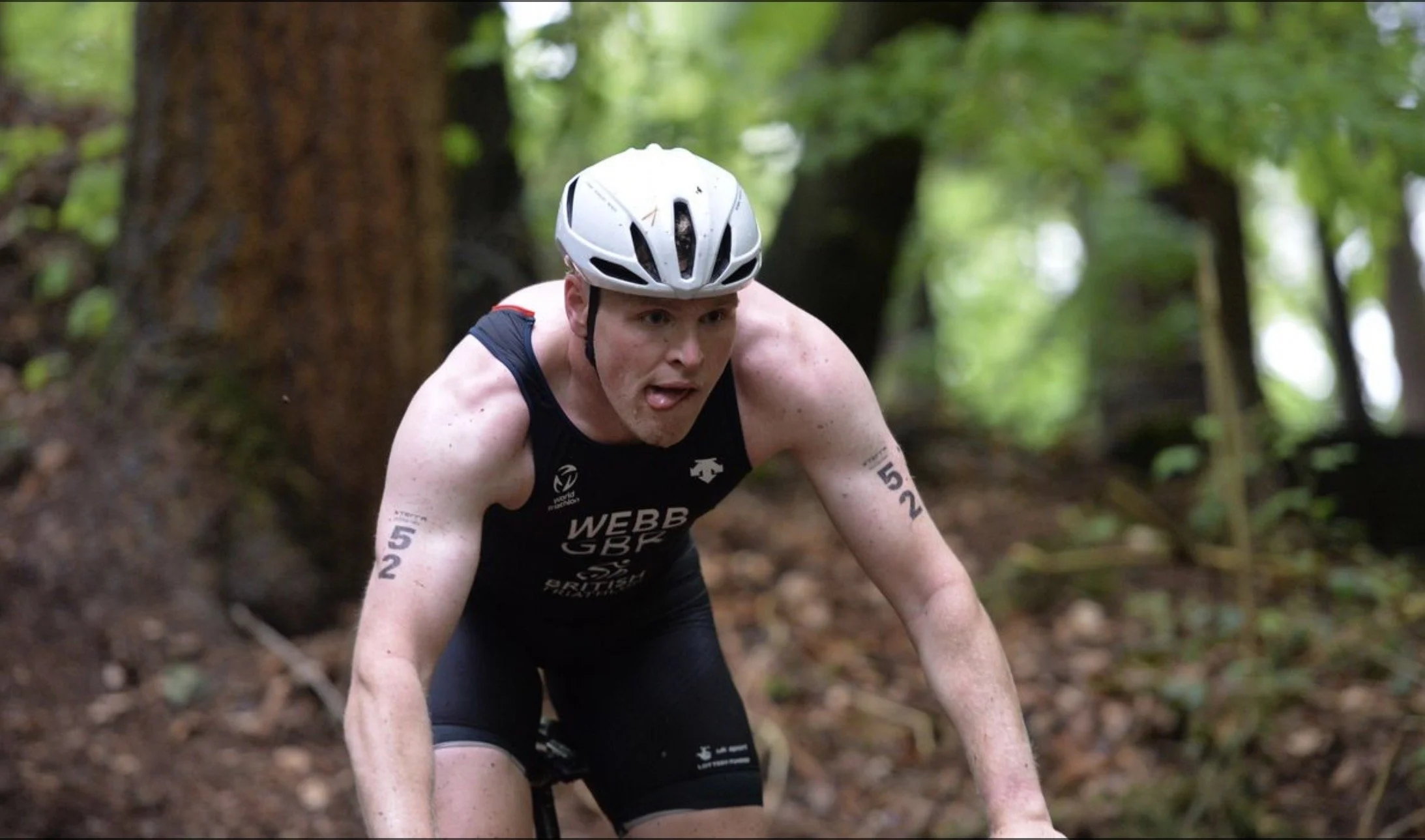
The History of British Age Group Qualification in Triathlon
How did British Age Group qualification begin? Discover the history behind the British Age Group Team, how qualification evolved, and why racing for Great Britain became a major goal for triathletes.
For many amateur triathletes, wearing the Great Britain trisuit represents the pinnacle of achievement.
The opportunity to race internationally, represent your country, and compete against the best athletes in your age category is something many athletes dream of.
But British Age Group qualification has not always looked the way it does today.
The system has evolved significantly over the years, shaped by the rapid growth of triathlon participation, international competition, and the increasing professionalism of age-group sport.
At Frederick Webb Triathlon, we work with athletes aiming to qualify for the British Age Group Team, and understanding the history behind the pathway helps explain why qualification today has become both more competitive and more rewarding.
Here is the story of the history of British Age Group qualification in triathlon.
The Early Days of Triathlon in Britain
Triathlon arrived in the UK during the 1980s, inspired largely by the sport’s rapid rise in the United States.
In those early years, triathlon was still considered niche.
Races were smaller, grassroots-driven, and often organised by local clubs.
There was little formal structure compared to modern racing.
Athletes simply entered races for personal challenge and competition.
As participation grew, demand increased for better race organisation, standardised rules, and national governance.
This eventually led to the creation of:
British Triathlon
Founded in the early 1980s, British Triathlon became responsible for governing the sport across the UK and developing pathways for both elite and amateur athletes.
The rise of structured competition helped open the door for international age-group racing.
The Birth of International Age-Group Competition
In the beginning, international triathlon competition focused largely on elite athletes.
However, endurance sport naturally attracted amateur participation.
Athletes wanted opportunities to race internationally while still competing fairly against peers of similar age.
This led to the development of age-group racing.
Rather than competing against professionals, athletes raced within age categories such as:
20–24
25–29
30–34
35–39
(and beyond)
This transformed triathlon.
Suddenly:
International competition became realistic for everyday athletes.
You no longer needed to be a professional to wear national colours.
You simply needed to qualify.
How the British Age Group Team Developed
As international championship racing expanded, British Triathlon introduced a structured qualification pathway.
The aim was to:
Reward competitive amateur athletes
Create fair selection systems
Develop stronger international representation
The British Age Group Team emerged as an opportunity for amateur athletes to represent Great Britain at major championship events.
Over time, athletes began competing at:
World Triathlon championships
Europe Triathlon championships
Across disciplines such as:
Sprint triathlon
Standard/Olympic distance triathlon
Middle distance
Long distance
Duathlon
Aquathlon
Cross triathlon
The concept quickly gained popularity.
For many athletes, qualification became a major career goal within amateur sport.
How Qualification Used to Work
In the early years, qualification pathways were often less formal than they are today.
Participation numbers were smaller.
Competition depth was lower.
Some races featured:
Smaller age-group fields
Fewer qualification standards
Simpler entry systems
As triathlon participation exploded during the 1990s and 2000s, things changed rapidly.
More athletes entered the sport.
Race standards improved.
Qualification became increasingly competitive.
What may once have required solid club-level performance eventually demanded structured training and specialist preparation.
The Olympic Effect on British Triathlon
A major turning point came when triathlon joined the Olympic Games at the:
2000 Summer Olympics
The inclusion of triathlon in the Olympics dramatically increased visibility.
Participation surged.
In the UK, this momentum accelerated even further following:
2012 Summer Olympics
And particularly after the success of British triathletes including:
Alistair Brownlee and Jonathan Brownlee.
Their Olympic success inspired huge numbers of amateur athletes to enter triathlon.
Naturally:
Interest in age-group qualification increased too.
Representing Great Britain no longer felt like something reserved for elite-level competitors.
It became an aspirational but realistic goal for committed amateurs.
Why Qualification Is Harder Today
Modern British Age Group qualification is more competitive than ever.
Why?
More Participants
Triathlon participation has grown enormously.
Larger fields mean stronger competition.
Better Coaching
Athletes now train smarter.
Access to:
Online coaching
Data tracking
Power meters
Structured programmes
Has raised standards significantly.
Marginal Gains Matter
Modern qualifiers focus on:
Aerodynamics
Nutrition
Strength training
Swim efficiency
Race pacing
Small improvements can now decide qualification.
Sometimes qualification is determined by only seconds.
How Qualification Works Today
Modern British Age Group qualification uses designated qualifying races.
Athletes compete for places based on:
Age category
Finishing performance
Qualification standards
Depending on the championship event, athletes may qualify through:
Automatic qualification
Roll-down places
This system ensures fairness while maintaining high performance standards.
Importantly:
You do not necessarily need to win your age group.
Many athletes qualify through consistency and smart racing.
Why Age Group Racing Has Become So Popular
For many amateur athletes, age-group racing provides:
Clear goals
Competitive structure
Community
International travel
Personal achievement
There is something uniquely rewarding about racing while representing your country.
For many athletes, qualification becomes a defining sporting achievement.
And for others?
The pursuit itself drives years of progression.
What the Future May Look Like
The future of British Age Group qualification will likely continue evolving.
Potential trends include:
Larger qualification fields
Increased competitiveness
Greater international participation
More technology-driven preparation
But one thing seems certain:
The appeal of racing for Great Britain will continue growing.
The trisuit still means something special.
It represents commitment, discipline, and years of hard work.
Final Thoughts
The history of British Age Group qualification shows how far triathlon has come.
What began as a niche endurance sport has evolved into a highly competitive pathway allowing amateur athletes to represent Great Britain on the international stage.
Today, qualification demands:
✔ Consistency
✔ Smart training
✔ Strong race execution
✔ Patience
But for many athletes:
It remains one of the most rewarding achievements in triathlon.
At Frederick Webb Triathlon, we help athletes work towards ambitious goals — from first sprint triathlons to British Age Group Team qualification — through personalised coaching and structured performance planning.
Dreaming of wearing the GB trisuit? Get in touch with Frederick Webb Triathlon and start building your pathway to qualification today.
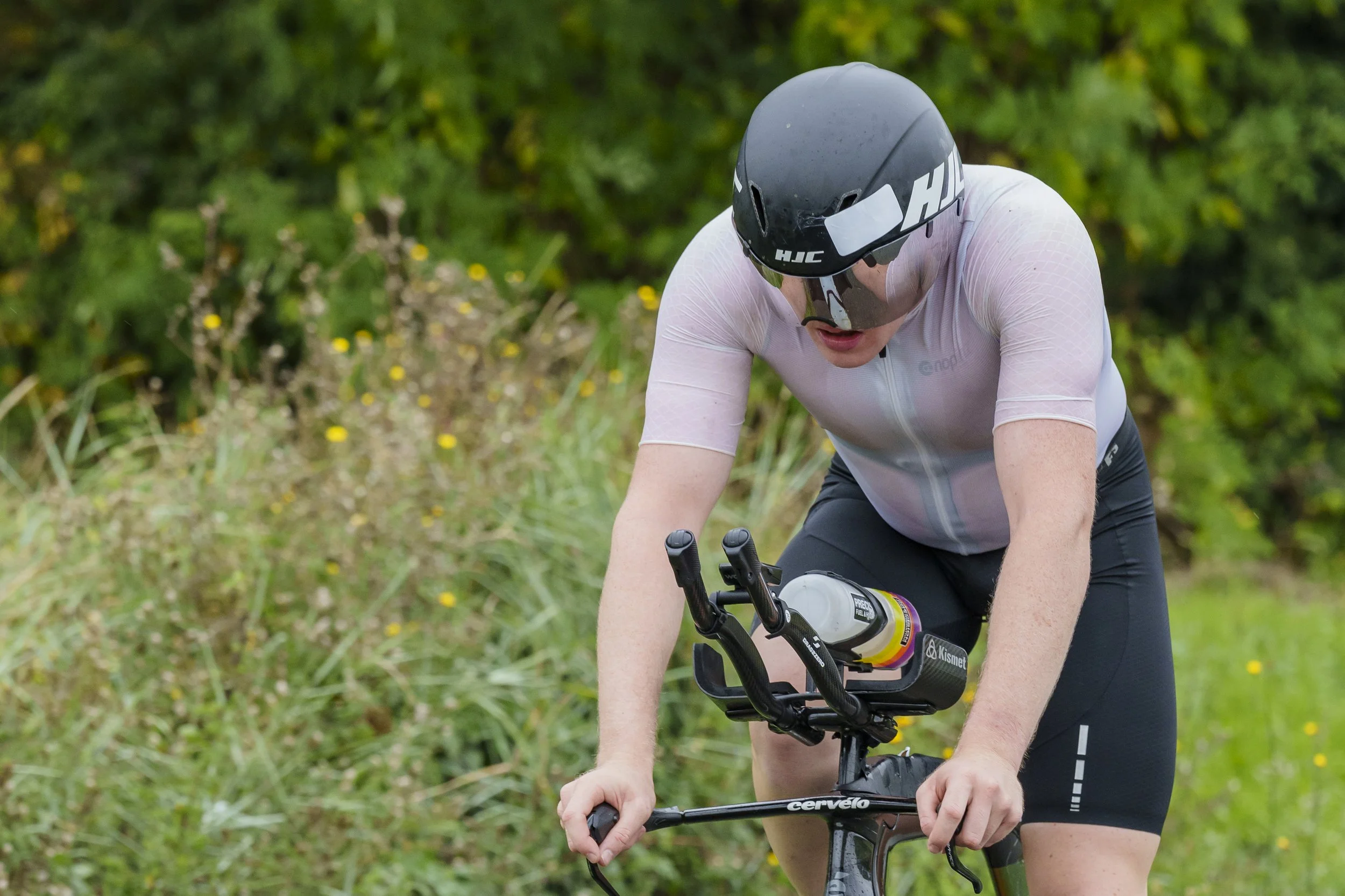
How to Qualify for the British Age Group Team: A Complete Guide for Triathletes
Dreaming of racing in a Great Britain trisuit? Learn exactly how to qualify for the British Age Group Team, understand the selection process, and improve your chances of earning your place.
For many amateur triathletes, there is one goal that stands above the rest:
Representing Great Britain.
Wearing the GB trisuit and racing internationally as part of the British Age Group Team is a huge achievement — and one that is more achievable than many athletes realise.
You do not need to be a professional.
You do not need to race full-time.
And contrary to popular belief:
You do not need to win races outright.
Every year, athletes from a huge range of backgrounds qualify to represent Great Britain in sprint, standard, middle, and long-distance triathlon events.
But understanding how to qualify for the British Age Group Team can feel confusing at first.
At Frederick Webb Triathlon, we have experience helping athletes work toward age-group qualification goals, from first-time qualifiers to athletes targeting podium finishes.
This guide explains exactly how the process works and what you can do to improve your chances.
What Is the British Age Group Team?
The British Age Group Team allows amateur athletes to represent Great Britain at international championships.
This includes events such as:
British Triathlon age-group championships
World Triathlon championship events
Europe Triathlon championships
Athletes compete in:
Sprint triathlon
Standard/Olympic distance triathlon
Middle distance
Long distance
Duathlon
Aquathlon
Cross triathlon
You compete against athletes in your age category, not against professionals.
Typical age bands include:
20–24
25–29
30–34
35–39
(and so on)
This makes qualification realistic for dedicated amateur athletes.
How Does British Age Group Qualification Work?
In simple terms:
You qualify through selected qualifying races.
For most championship events, British Triathlon designates one or more races as qualification opportunities.
At these races, athletes compete for qualification slots.
Generally:
The fastest athletes in each age category secure qualification.
However, selection is not always as simple as finishing position.
It depends on:
Championship event
Race distance
Qualification policy
Number of available slots
Some events use:
Automatic Qualification
Finish within the qualification criteria.
Others may use:
Roll-Down Qualification
If qualified athletes decline places, spots roll down to the next athletes.
This means:
You do not always have to win your age group to qualify.
Sometimes athletes qualify several positions down depending on demand.
What Standard Do You Need?
This is one of the biggest questions.
The honest answer?
It depends on your age group and event.
Some age groups are highly competitive.
Others have fewer athletes competing.
For example:
Men aged 35–49 are often extremely competitive
Older age groups may have fewer athletes
Some championship distances are deeper than others
In many races, qualification comes down to:
Smart pacing
Consistency
Strong execution
Not just raw talent.
Many athletes underestimate what is possible.
With focused training, age-group qualification can become a realistic goal.
What Races Count as Qualifiers?
Each season, British Triathlon publishes official qualifying races.
These vary depending on:
Sprint championships
Standard distance championships
Middle distance championships
Long distance championships
Common UK races often act as qualifiers for championship events.
Qualification races are normally announced well in advance, allowing athletes to plan training around specific goals.
Before entering, always check:
Event distance
Qualification status
Selection criteria
Deadlines
The rules can change year to year.
Sprint vs Standard vs Long Distance Qualification
Different formats require different strengths.
Sprint Distance
Typically favours:
Higher speed
Strong swim ability
Fast transitions
Aggressive pacing
Standard/Olympic Distance
Requires:
Better endurance balance
Smart pacing strategy
Middle & Long Distance
Often reward:
Consistency
Aerobic endurance
Nutrition strategy
Experience
Choosing the right event for your strengths matters.
Many athletes qualify faster by selecting races that suit their profile.
How Hard Is It to Qualify?
The answer:
Challenging — but realistic.
For some athletes:
Qualification may happen quickly.
For others:
It may take years of progression.
What usually separates qualifiers?
Consistency
Successful athletes rarely rely on motivation alone.
They train consistently.
Smart Training
Doing more is not always better.
Structured training matters.
Race Execution
Pacing mistakes ruin many qualification attempts.
Attention to Detail
Small gains matter:
Swim efficiency
Bike aerodynamics
Running economy
Nutrition
Transitions
Often qualification is decided by only a few minutes.
Sometimes seconds.
Common Mistakes Athletes Make
Racing Too Often
Constant racing often hurts development.
Focused preparation matters more.
Training Too Hard All the Time
Most progress comes from smart consistency.
Not constant exhaustion.
Ignoring Weaknesses
A poor swim or weak run can limit progress.
Improve weaknesses.
Poor Race-Day Pacing
Many athletes go too hard early.
Strong pacing often beats aggressive pacing.
No Long-Term Plan
Age-group qualification usually rewards patience.
The best athletes build over time.
Can Beginner Triathletes Qualify?
Absolutely.
Many age-group athletes start later in life.
Some qualifiers:
Started in their 30s
40s
Even 50s+
Triathlon is unique because endurance improvements can continue for years.
You do not need an elite background.
You need:
Commitment
Consistency
Smart coaching
Patience
Progress compounds.
How Coaching Can Improve Qualification Chances
One of the fastest ways to improve is structured coaching.
A personalised coach can help:
Identify weaknesses
Improve pacing
Build race-specific fitness
Structure training blocks
Prevent burnout
At Frederick Webb Triathlon, we work with athletes aiming for:
First-time qualification
GB age-group representation
Championship performance goals
The difference often comes from smart planning rather than simply training harder.
Is It Worth It?
For many athletes:
Absolutely.
Representing Great Britain creates:
Unforgettable experiences
International racing opportunities
Huge personal achievement
Lifelong memories
For many age-group athletes, putting on the GB trisuit becomes the proudest moment in sport.
And the journey itself often transforms confidence and performance.
Final Thoughts
If racing for Great Britain feels like a distant dream:
Do not write yourself off too early.
Many athletes underestimate what structured, consistent training can achieve.
To improve your chances:
✔ Choose the right qualifying races
✔ Train consistently
✔ Improve weaknesses
✔ Learn race execution
✔ Think long-term
Qualification is not reserved for professionals.
It is achievable for committed amateur athletes willing to train smart.
At Frederick Webb Triathlon, we help athletes work toward ambitious goals — including British Age Group Team qualification — through personalised coaching, race planning, and performance support.
Want help building a realistic plan to qualify for the British Age Group Team? Get in touch with Frederick Webb Triathlon and start training with purp