

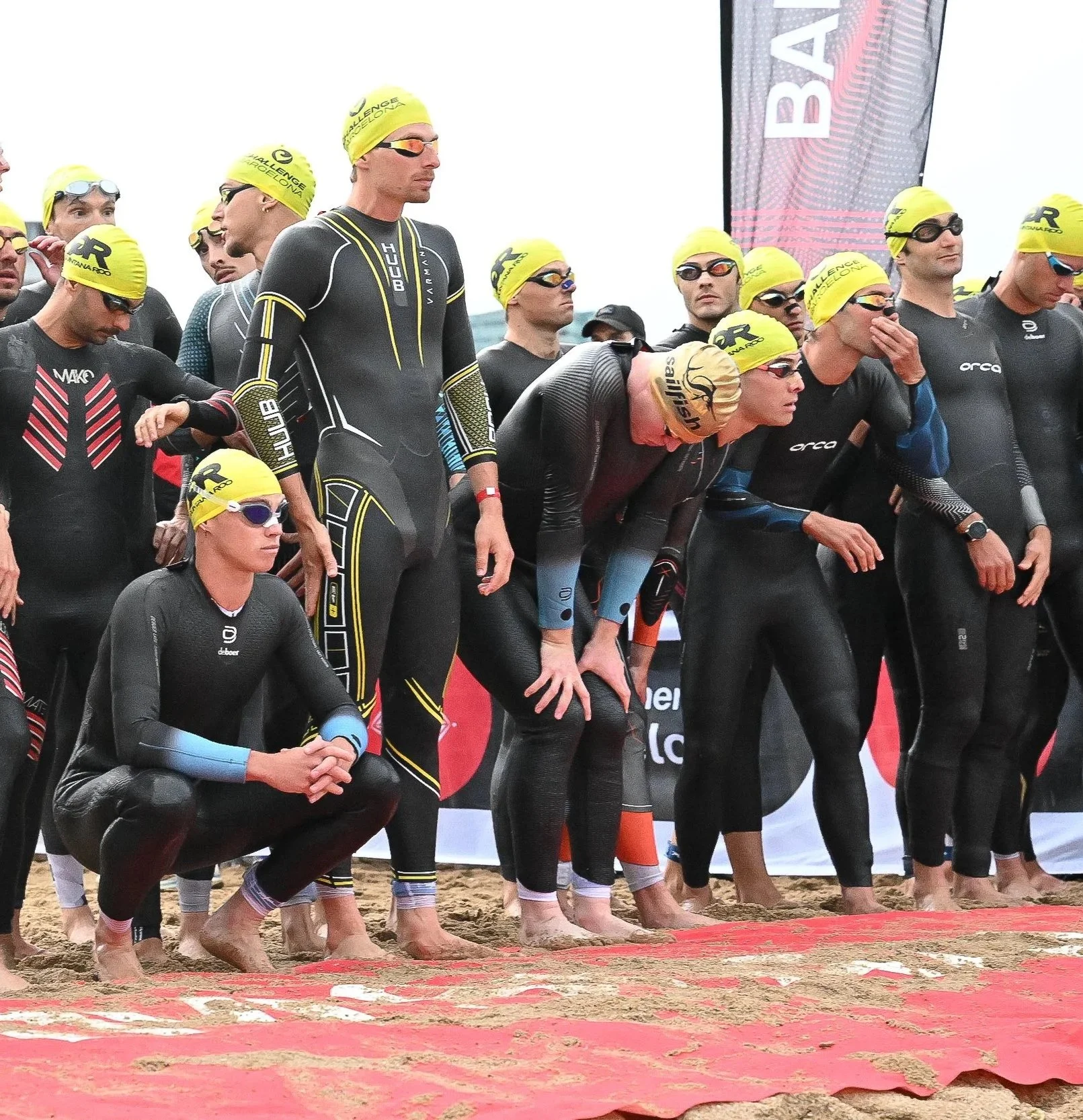
Common Mistakes Athletes Make Trying to Qualify for the British Age Group Team
Many triathletes are capable of qualifying for the British Age Group Team but fall short because of avoidable mistakes. From poor race selection and pacing errors to ineffective training and inadequate recovery, discover the biggest reasons athletes miss qualification and how to maximise your chances of success.
Representing Great Britain at a European or World Championship is a dream for many triathletes.
Pulling on the GB Age Group trisuit is often the result of years of dedication, consistent training, and smart race execution.
Yet every season, many talented athletes miss qualification despite having the physical ability to achieve it.
Why?
Because qualification is about more than fitness alone.
At Frederick Webb Triathlon, we've worked with athletes targeting Age Group qualification across sprint, standard, middle-distance, and long-course racing. One thing becomes clear very quickly:
Most athletes who miss qualification don't do so because they lack talent. They miss it because they make avoidable mistakes.
If you're aiming to qualify for the British Age Group Team, understanding these mistakes can dramatically improve your chances of success.
Mistake 1: Training Hard Instead of Training Smart
One of the most common misconceptions in triathlon is that more training automatically leads to better results.
Many athletes chasing qualification become obsessed with:
Training volume
Hard sessions
Weekly mileage
The problem?
More training only works if you can recover from it.
Many aspiring qualifiers spend too much time training in a fatigued state, reducing the quality of key sessions and increasing injury risk.
The athletes who qualify consistently aren't always the ones training the most.
They're often the ones training most effectively.
Mistake 2: Ignoring Recovery
Recovery is often treated as something that happens when there's time.
In reality, recovery is part of training.
Without adequate recovery, your body cannot adapt.
Common recovery mistakes include:
Poor sleep habits
Inadequate fuelling
Excessive racing
Lack of recovery days
High life stress
Many athletes focus entirely on the sessions they complete while ignoring the recovery required to benefit from them.
The fastest athletes often recover just as well as they train.
Mistake 3: Racing Too Often
This is particularly common among ambitious age-group athletes.
You enter one race.
Then another.
Then another.
Before long, your season is packed with events.
Every race creates fatigue.
Every race requires recovery.
Every race disrupts training.
If qualification is your primary goal, your season should be built around your qualification races.
Everything else should support that objective.
Mistake 4: Choosing the Wrong Qualification Race
Not all qualification races are equal.
Some athletes select races based on convenience rather than opportunity.
Factors to consider include:
Course profile
Strengths and weaknesses
Competition level
Travel requirements
Time of year
A hilly bike course may favour one athlete.
A flat, fast course may favour another.
Strategic race selection can significantly improve qualification chances.
Mistake 5: Poor Pacing on Race Day
Many qualification attempts are lost because athletes race emotionally rather than strategically.
Examples include:
Starting the swim too hard
Chasing competitors on the bike
Running too aggressively early
Qualification races often reward patience.
Athletes frequently sacrifice minutes later in the race by gaining seconds early.
The most successful qualifiers understand their pacing strategy and stick to it.
Mistake 6: Neglecting Nutrition
Nutrition mistakes are one of the most preventable reasons athletes underperform.
Common issues include:
Under-fuelling during training
Poor hydration
Inadequate carbohydrate intake
Trying new products on race day
The longer the event, the greater the impact of nutrition.
You may have the fitness to qualify.
But if your nutrition strategy fails, your qualification chances can disappear quickly.
Mistake 7: Focusing Too Much on Qualification Standards
Many athletes spend weeks studying:
Previous qualification times
Rankings
Competitor results
While useful, this can become distracting.
The danger is racing the clock rather than racing your best race.
Qualification is often achieved through excellent execution rather than constant comparison.
Focus on controlling:
✔ Training
✔ Recovery
✔ Pacing
✔ Nutrition
✔ Preparation
The outcome usually takes care of itself.
Mistake 8: Ignoring Weaknesses
Most athletes enjoy training what they are already good at.
Unfortunately, qualification is often determined by weaknesses.
Examples:
Strong cyclists avoiding swim work
Good runners neglecting bike training
Athletes avoiding strength training
Improvement usually comes from addressing limiters rather than reinforcing strengths.
The athletes who qualify often make the biggest gains where they are weakest.
Mistake 9: Lack of Open Water Preparation
Many athletes train almost exclusively in pools.
Then arrive at an open water qualification race feeling uncomfortable and underprepared.
Open water introduces:
Crowding
Navigation
Variable conditions
Race pressure
A strong pool swimmer is not automatically a strong open water swimmer.
Practising open water skills can save valuable time and energy.
Mistake 10: Failing to Peak Properly
Many athletes arrive at qualification races tired.
Training has gone well.
Fitness is high.
But fatigue is even higher.
The final weeks before a qualification race should focus on reducing fatigue while maintaining fitness.
Trying to squeeze in extra training often backfires.
Fresh athletes perform well.
Fatigued athletes rarely do.
Mistake 11: Overcomplicating Training
The internet provides endless advice.
Training trends.
New methods.
Advanced workouts.
Many athletes become overwhelmed trying to optimise everything.
The reality is that qualification is usually built on fundamentals:
Consistent training
Appropriate recovery
Good nutrition
Smart pacing
Simple, well-executed training often beats complicated training.
Mistake 12: Trying to Do Everything Alone
Many athletes wait until they are close to qualification before seeking guidance.
This often means years of trial and error.
A coach can provide:
Objective feedback
Training structure
Accountability
Race planning
Qualification strategy
Sometimes the fastest route to qualification is avoiding the mistakes others have already made.
What Successful Qualifiers Do Differently
Athletes who consistently achieve Age Group qualification tend to:
Train consistently over long periods
Prioritise recovery
Race strategically
Focus on weaknesses
Execute nutrition plans well
Trust their training
Avoid panic decisions
Most importantly, they remain patient.
Qualification rarely happens because of one great session.
It is usually the result of months or years of smart preparation.
The Difference Between Fitness and Performance
One of the most important lessons in Age Group racing is understanding that fitness and performance are not the same thing.
Many athletes are fit enough to qualify.
Far fewer are prepared enough to qualify.
Performance requires:
Fitness
Freshness
Confidence
Execution
Ignoring any one of these can significantly impact results.
Final Thoughts
Qualifying for the British Age Group Team is an ambitious but achievable goal for many athletes.
However, success requires more than simply training harder.
Avoiding common mistakes can often provide a bigger performance gain than adding extra training hours.
Focus on:
✔ Smart training
✔ Effective recovery
✔ Strategic race selection
✔ Strong nutrition
✔ Proper tapering
✔ Excellent race execution
Do these consistently, and you'll give yourself the best possible chance of standing on the start line wearing a Great Britain trisuit.
At Frederick Webb Triathlon, we help athletes build structured pathways towards Age Group qualification through personalised coaching, race planning, and long-term performance development.
Ready to maximise your qualification potential? Get in touch with Frederick Webb Triathlon and start building your route to representing Great Britain.
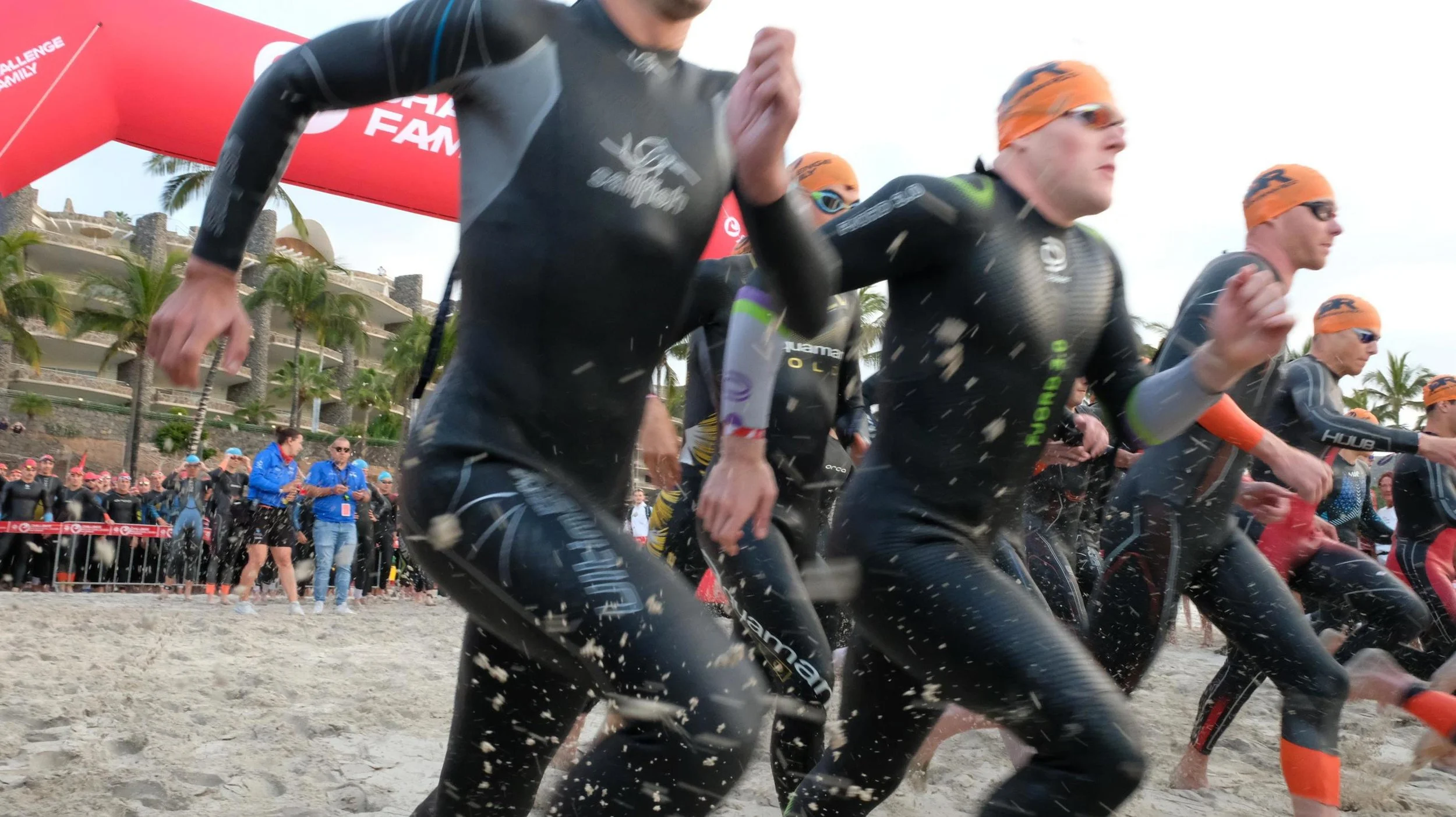
Sprint vs Standard Distance: Which Gives You the Best Chance?
Should you race sprint or standard distance triathlon? Discover the key differences, who each distance suits best, and which may give you the best chance of success or British Age Group qualification.
One of the biggest decisions triathletes face is:
Should I race sprint distance or standard distance?
For some athletes, sprint racing feels exciting and fast.
For others, standard distance feels more manageable because the pacing is less aggressive.
And if you are targeting British Age Group qualification, choosing the right distance can make a major difference.
The truth is:
Neither distance is “better.”
But one may suit your strengths, fitness profile, and racing style significantly more.
At Frederick Webb Triathlon, we often help athletes decide which distance offers the best chance of:
Better performance
Faster progression
More enjoyment
Greater qualification opportunities
So let’s break down Sprint vs Standard distance triathlon and figure out which might give you the best chance.
First: What Are the Distances?
Sprint Distance Triathlon
Typically includes:
750m swim
20km bike
5km run
Sprint races are:
Shorter
Faster paced
More intense
Often lasting:
1–1.5 hours depending on ability.
Standard (Olympic) Distance Triathlon
Typically includes:
1500m swim
40km bike
10km run
Standard distance races demand:
More endurance
Better pacing
Stronger aerobic fitness
Usually lasting:
2–3+ hours.
While standard distance is only “double” sprint distance on paper:
It often feels significantly different physically and mentally.
Sprint Distance: Who Does It Suit Best?
Sprint triathlon often rewards athletes who are:
✔ Naturally fast
✔ Strong runners
✔ Comfortable suffering at high intensity
✔ Good at short, aggressive efforts
Sprint racing is hard.
Really hard.
Because there is very little room to settle in.
Pacing tends to feel:
“Uncomfortably hard from the start.”
There is less opportunity to recover from mistakes.
A poor swim or bike section can be difficult to claw back.
Sprint distance particularly suits athletes who:
Come from running backgrounds
Have good top-end speed
Recover quickly from hard efforts
Perform well under pressure
If you enjoy intensity:
Sprint may suit you.
Standard Distance: Who Does It Suit Best?
Standard distance tends to favour athletes with:
✔ Better endurance
✔ Strong aerobic fitness
✔ Good pacing ability
✔ Patience and discipline
Unlike sprint racing:
You cannot simply “redline” from the start.
Pacing becomes far more important.
Too hard early?
You will pay later.
Standard distance often rewards:
Strong cyclists
Efficient swimmers
Endurance-focused athletes
Athletes who improve steadily over time often perform extremely well here.
For many triathletes:
Standard distance feels more tactical.
Less chaotic.
More controlled.
Which Distance Is Better for Beginners?
This surprises many athletes.
People often assume sprint is automatically easier.
Sometimes:
It is.
Sometimes:
It is not.
Why Sprint Can Be Hard for Beginners
Sprint racing feels short.
But intensity is high.
Beginners often go:
Too hard on the bike
Too fast in the run
Panic in the swim
The shorter format leaves little margin for pacing errors.
Why Standard Can Be Better for Some Athletes
The slightly longer distance encourages steadier pacing.
Many endurance-oriented beginners actually find standard distance more comfortable.
Especially athletes from:
Cycling backgrounds
Running endurance backgrounds
Long-distance sports
The best beginner distance depends on:
Fitness profile
Confidence
Training time
Personality
Which Gives the Best Chance of British Age Group Qualification?
This is where strategy matters.
The honest answer:
It depends on your strengths and competition depth.
Some observations:
Sprint Qualification
Often:
More competitive
Faster athletes
Stronger runners
Margins can be tiny.
Seconds matter.
Sprint racing usually favours:
High power output
Fast transitions
Explosive pacing
Standard Distance Qualification
Often rewards:
Endurance
Experience
Smart pacing
Mistakes become more costly.
But endurance athletes sometimes thrive here.
At Frederick Webb Triathlon, we often help athletes choose qualification races strategically.
Sometimes the smartest move is not racing the most popular distance.
It is racing the distance that suits your physiology and strengths.
Swimming Matters More Than You Think
Sprint Distance
A weak swim can hurt badly.
There is less time to recover.
Small gaps become meaningful quickly.
Standard Distance
The swim still matters.
But there is more opportunity to settle into rhythm and recover on the bike.
Confident swimmers often enjoy sprint.
Nervous swimmers sometimes prefer standard pacing.
Bike Strength Changes Everything
Strong Cyclists Often Prefer Standard
Why?
More time to leverage bike strength.
You have longer to:
Ride tactically
Build advantage
Set up the run
Strong Runners Often Like Sprint
Shorter races often favour athletes who can:
Push hard
Run aggressively off the bike
Especially over 5km.
Which Is More Enjoyable?
This is personal.
Sprint Racing Feels:
Fast
Exciting
Aggressive
Adrenaline-heavy
Standard Racing Feels:
More strategic
More aerobic
More controlled
Some athletes love sprint chaos.
Others love pacing and endurance.
You may need to try both.
Many athletes are surprised by what they enjoy most.
Recovery Between Races
Sprint racing often allows:
More frequent racing
Faster recovery
This makes it useful for:
Gaining race experience
Testing pacing
Standard distance usually requires:
Longer recovery
More structured preparation
This can mean fewer races but bigger performance gains.
Common Mistakes When Choosing
Picking Based on Fear
Do not avoid standard because it looks longer.
You may actually suit it better.
Following Friends
Your strengths are unique.
Assuming Sprint Is Easier
Higher intensity changes things.
Ignoring Your Background
Your sport history matters.
Former runners often love sprint.
Endurance cyclists often thrive in standard.
So… Which Gives You the Best Chance?
Choose sprint if you:
✔ Like intensity
✔ Have strong running speed
✔ Recover quickly
✔ Enjoy racing hard
Choose standard if you:
✔ Prefer endurance
✔ Pace well
✔ Have strong bike fitness
✔ Like controlled racing
For British Age Group qualification:
The smartest distance is usually:
The one that best matches your strengths.
Not necessarily the shortest.
Not necessarily the hardest.
The one that gives you the best chance to perform at your highest level.
Final Thoughts
Sprint and standard distance both offer brilliant racing experiences.
Neither is universally better.
The best choice depends on:
✔ Your physiology
✔ Your experience
✔ Your mindset
✔ Your strengths
✔ Your goals
The biggest mistake?
Racing a distance because everyone else says you should.
Race the one that fits you.
At Frederick Webb Triathlon, we help athletes choose the right race distance, structure training, and maximise performance — whether the goal is a first finish line, a personal best, or British Age Group qualification.
Not sure which distance suits you best? Get in touch with Frederick Webb Triathlon and build a smarter race strategy today