

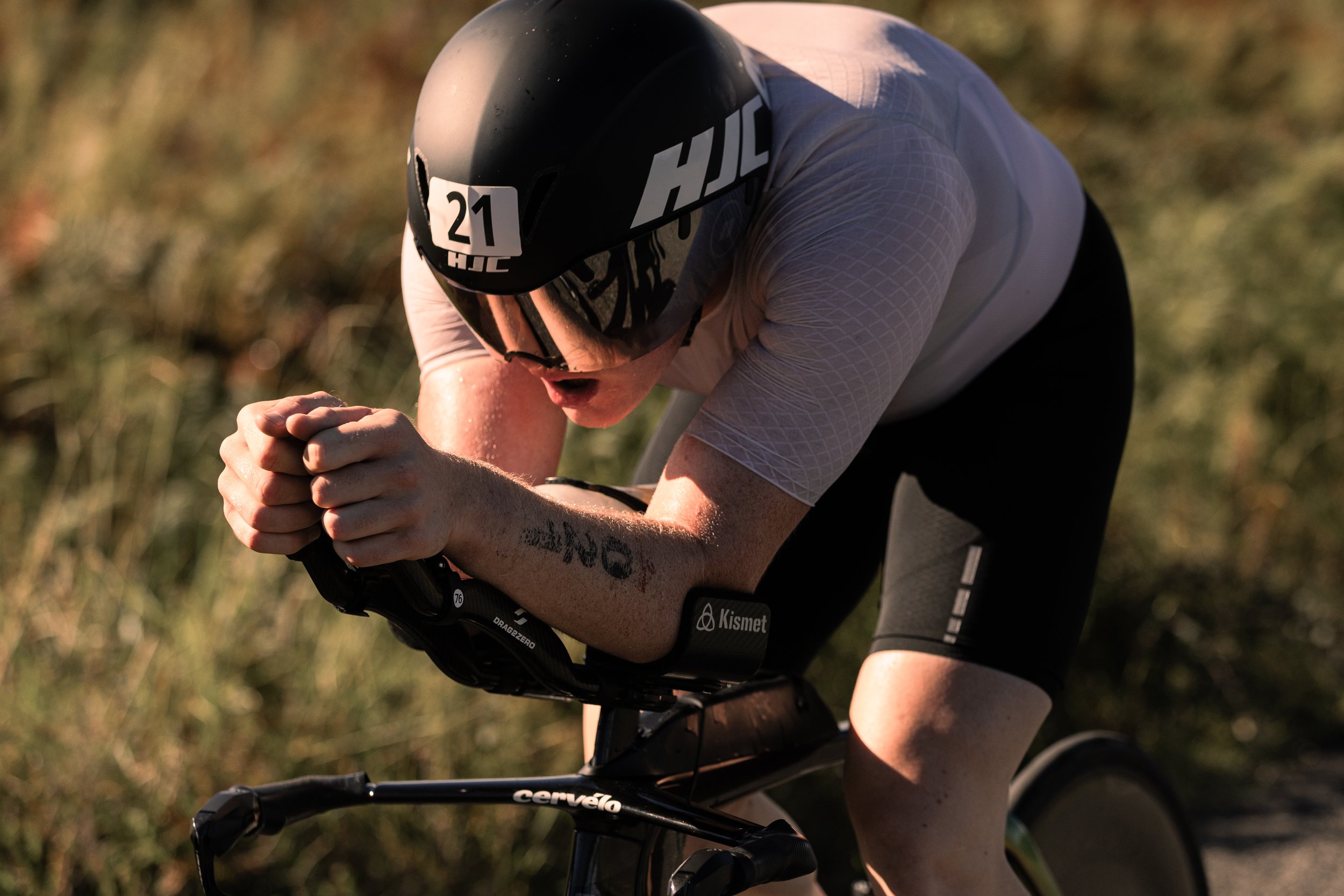
Stop Copying Pro Athletes: Why Elite Training Could Make You Worse
Professional triathletes train differently because they live differently. What works for a full-time elite athlete can be ineffective—or even harmful—for age-group competitors. Discover why copying pro athletes may be slowing your progress rather than accelerating it.
Every day on Instagram, YouTube and Strava, athletes are exposed to professional triathletes sharing their training.
A six-hour bike ride.
A 30km run.
A brutal swim session.
A 35-hour training week.
It's inspiring.
It's motivating.
And for many athletes, it's incredibly dangerous.
Because one of the biggest mistakes age-group triathletes make is assuming:
"If it works for a professional athlete, it must work for me."
Unfortunately, that's rarely true.
At Frederick Webb Triathlon, I regularly see athletes attempting to replicate professional training programmes, only to become tired, injured, frustrated, or slower.
The reality is simple:
Elite training is designed for elite athletes.
Not for someone juggling work, family, travel, stress, and limited recovery time.
The Biggest Mistake in Triathlon
Most athletes believe the secret to getting faster is discovering what the professionals are doing.
So they follow:
Professional triathletes
Influencers
YouTube channels
Strava uploads
Social media training advice
Then they try to replicate it.
The problem?
You're seeing the workout.
You're not seeing the athlete.
And that's a massive difference.
Pros Aren't Just Fitter Than You
Most people assume professionals succeed simply because they're fitter.
That's only part of the story.
Professional athletes typically have:
Years of structured training
Exceptional aerobic development
High training tolerance
Optimised recovery
Extensive race experience
Strong movement patterns
Nutrition support
Strength training support
Access to expert coaching
Most age-group athletes don't.
A session that stimulates adaptation in a professional athlete could completely overwhelm an amateur athlete.
You See the Workout. You Don't See the Recovery
Social media loves hard sessions.
You see:
"5-hour ride with 3 x 40 minutes at race pace."
You don't see:
The afternoon nap
The sports massage
The recovery protocols
The flexible schedule
The low-stress environment
Recovery is part of the training process.
Professional athletes don't just train differently.
They recover differently.
And that's often the bigger advantage.
Elite Training Is Built on Elite Foundations
Imagine someone trying to build the roof of a house before laying the foundations.
That's what many age-group athletes do when copying professional training.
Elite athletes have often spent years building:
Aerobic fitness
Musculoskeletal resilience
Training consistency
Technical skills
The impressive workouts you're seeing are built on thousands of hours of previous training.
Without that foundation, trying to replicate elite sessions is often counterproductive.
More Volume Doesn't Automatically Mean More Improvement
One of the most common mistakes is assuming training volume is the answer.
A professional triathlete might train:
20 hours per week
25 hours per week
30+ hours per week
An age-group athlete sees this and thinks:
"Maybe I need more volume."
But more training only works when:
Recovery supports it
Lifestyle allows it
Adaptation occurs
Otherwise, you're simply accumulating fatigue.
Many athletes would improve more from a structured 10–12 hour programme than an unmanageable 18-hour one.
The Injury Trap
One of the quickest ways to get injured is to train beyond your current capacity.
Professional athletes can often tolerate workloads that would break most recreational competitors.
Why?
Because they've spent years developing the ability to tolerate them.
Common outcomes when athletes copy elite training include:
Calf injuries
Achilles problems
Knee pain
Hamstring issues
Chronic fatigue
Burnout
The goal isn't to survive training.
The goal is to improve from it.
Your Life Matters More Than Their Training Plan
This is the factor social media never shows.
Your training doesn't happen in isolation.
It exists alongside:
Work commitments
Family responsibilities
Travel
Financial pressures
Sleep disruption
Life stress
These factors affect recovery enormously.
A professional athlete's training plan assumes a professional athlete's lifestyle.
Your training needs to fit your reality.
Not theirs.
What Works for Them Might Be Wrong for You
Imagine two athletes:
Athlete A
Professional triathlete
25 hours per week available
Sleeps 9 hours nightly
Trains full-time
Athlete B
Full-time job
Young family
8–10 training hours weekly
Frequently travels for work
Should they follow the same programme?
Of course not.
Yet this is exactly what many athletes unknowingly attempt when they copy professionals.
Pros Train to Win Races
Most age-group athletes train to:
Finish races
Set personal bests
Improve fitness
Qualify for Age Groups
Balance sport with life
Those are different goals.
The training should reflect that.
Professional athletes are often willing to take risks that recreational athletes shouldn't.
Missing work because of overtraining or injury isn't usually part of the plan for an age-grouper.
Social Media Rewards Extreme Training
There is another issue.
Extreme sessions get attention.
Nobody posts:
"Completed a sensible aerobic ride and went to bed early."
Instead you see:
Massive training weeks
Huge mileage
Brutal intervals
Epic suffering
Because that's what generates engagement.
The result is a distorted picture of what successful training actually looks like.
The fundamentals rarely go viral.
But they are what make athletes faster.
The Best Athletes Train Appropriately
The athletes who improve most consistently aren't usually the ones doing the most training.
They're the ones doing the right training.
Training that is:
Specific
Sustainable
Progressive
Recoverable
That's far less exciting than copying a professional's session.
But it's far more effective.
What Should You Copy From Professionals?
Interestingly, there are things worth copying.
Not necessarily their sessions.
But their habits.
For example:
✔ Consistency
✔ Recovery
✔ Sleep
✔ Nutrition
✔ Discipline
✔ Long-term thinking
✔ Attention to detail
These behaviours often contribute far more to performance than a single workout ever will.
The Real Secret of Elite Athletes
Most people think elite athletes succeed because of extraordinary sessions.
The truth is usually less glamorous.
Elite athletes become elite because they execute the basics exceptionally well for years.
Not weeks.
Not months.
Years.
They don't chase shortcuts.
They trust the process.
That's the lesson worth learning.
Why Personalised Coaching Works Better
The best training programme isn't the one used by a professional athlete.
It's the one designed around you.
Your:
Goals
Lifestyle
Recovery capacity
Strengths
Weaknesses
Race calendar
all matter.
A personalised programme accounts for these factors.
A copied programme doesn't.
Why Frederick Webb Triathlon Takes a Different Approach
At Frederick Webb Triathlon, coaching starts with the athlete rather than the workout.
The goal isn't to recreate what a professional athlete is doing.
The goal is to identify what will help you improve.
Every programme is built around:
Available training time
Experience level
Recovery capacity
Performance goals
Lifestyle constraints
Because sustainable progress always beats impressive-looking training.
Final Thoughts
Professional athletes can provide inspiration.
They can provide motivation.
They can even provide useful ideas.
But they should not become your training plan.
Remember:
Elite training works because it's designed for elite athletes.
Trying to copy it without the same fitness, recovery capacity and lifestyle can actually make you slower.
The most successful age-group athletes aren't the ones pretending to be professionals.
They're the ones following training that is appropriate for their own circumstances.
So stop asking:
"What is the pro doing?"
Start asking:
"What do I need to do?"
That's where real progress begins.
At Frederick Webb Triathlon, personalised coaching helps athletes train intelligently, recover effectively and maximise performance without unnecessary volume, fatigue or guesswork.
Train for your life. Train for your goals. Train for your potential.
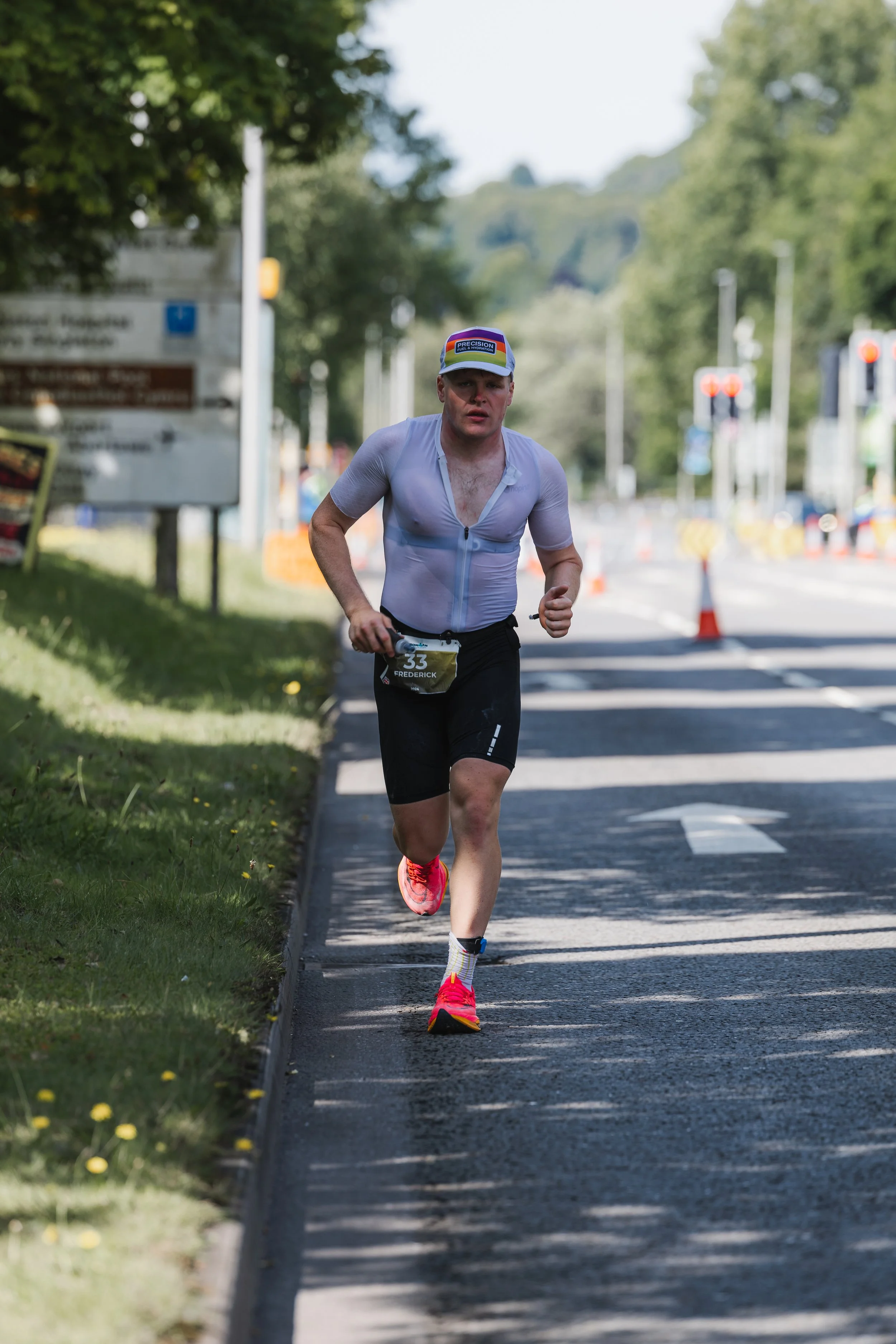
You Probably Don't Need More Training — You Need Better Training
When performance stalls, most triathletes assume they need more training. More miles, more sessions, and more intensity. The reality is often the opposite. Discover why better training—not more training—is usually the key to unlocking your next breakthrough.
If you're like most triathletes, you've probably had this thought before:
"Maybe I just need to train more."
More swimming.
More cycling.
More running.
More hours.
More suffering.
After all, if training is good, then more training must be better... right?
Not necessarily.
In fact, one of the biggest mistakes endurance athletes make is assuming that every performance problem can be solved by increasing training volume.
At Frederick Webb Triathlon, I've worked with athletes ranging from complete beginners to Age Group qualifiers and Ironman competitors.
And one pattern appears again and again:
Most athletes don't need more training.
They need better training.
The "More Is Better" Myth
Triathlon attracts ambitious people.
We're naturally driven to work hard.
When progress slows, the instinct is often simple:
Add another session.
Extend the long ride.
Run further.
Push harder.
The problem is that your body doesn't improve because of how much training you do.
It improves because of how well it adapts to that training.
More training only works if your body can recover from it.
Without recovery, you're simply accumulating fatigue.
Why More Training Stops Working
When athletes first start training, almost anything works.
More volume often leads to rapid improvements.
But eventually things change.
The athlete becomes fitter.
Adaptations become harder to achieve.
The margin for error becomes smaller.
At this point, simply adding more work often produces:
Chronic fatigue
Stagnant performance
Increased injury risk
Reduced motivation
Poor recovery
Declining session quality
Many athletes hit a plateau not because they're under-training but because they're no longer recovering effectively.
The Real Question: Is Your Training Effective?
Instead of asking:
"How much am I training?"
Ask:
"How effective is my training?"
These are very different questions.
An athlete training 10 focused hours per week can often outperform an athlete training 15–20 poorly structured hours.
Quality matters.
Purpose matters.
Execution matters.
Most Athletes Have a Recovery Problem, Not a Training Problem
This might be the most controversial statement in this article.
Many triathletes believe they need more fitness.
What they actually need is more recovery.
Training creates stress.
Recovery creates adaptation.
Without adequate recovery:
Muscles don't rebuild effectively
Fitness gains are reduced
Fatigue accumulates
Injury risk increases
The irony is that some athletes improve dramatically when they train less.
Not because less training is inherently better.
But because it finally allows adaptation to occur.
More Volume Isn't Always the Limiter
Imagine two athletes.
Athlete A
Trains 18 hours per week
Rarely takes recovery seriously
Constantly feels tired
Struggles to hit session targets
Athlete B
Trains 12 hours per week
Recovers well
Executes key sessions properly
Arrives fresh for important workouts
Which athlete is likely to improve more?
In many cases, Athlete B.
Because fitness is not built by accumulating hours.
Fitness is built by accumulating adaptations.
Every Session Should Have a Purpose
One of the easiest ways to identify poor training is to ask:
"Why am I doing this session?"
If the answer is:
"Because I always do it."
or
"I thought I needed more volume."
then the session may not be contributing much value.
Effective training should have a clear purpose.
For example:
Developing aerobic fitness
Improving threshold performance
Building race-specific endurance
Enhancing technique
Supporting recovery
Every session should move you closer to a specific goal.
The Hidden Cost of Junk Miles
Not all training is equal.
Many athletes accumulate what coaches often call "junk miles."
Training that:
Creates fatigue
Consumes recovery resources
Adds little meaningful adaptation
This doesn't mean easy training is bad.
Far from it.
Easy aerobic training is essential.
The issue is training without intention.
The goal isn't to be tired.
The goal is to become better.
Better Training Means Better Timing
The right session at the wrong time can still be the wrong session.
Consider an athlete completing a hard interval workout when they're already exhausted from work stress, poor sleep and previous training.
The workout might look impressive on TrainingPeaks.
But was it effective?
Smart training considers:
Fatigue
Recovery
Life stress
Upcoming races
Long-term progression
Training isn't simply about what you do.
It's about when you do it.
Why Personalisation Matters
This is where generic plans often fall short.
Two athletes might have identical race goals.
Yet they may require completely different training.
Factors such as:
Age
Experience
Injury history
Recovery capacity
Work commitments
Family life
Available training time
all influence what constitutes effective training.
The best training plan isn't the hardest one.
It's the one you can consistently execute and recover from.
Better Training Often Means Doing Less
This is something many athletes struggle to accept.
Sometimes improvement comes from:
Skipping an unnecessary session
Reducing intensity
Recovering properly
Improving sleep
Fueling better
Strength training intelligently
These changes don't look exciting on social media.
But they often produce significant performance gains.
The Best Athletes Don't Chase Fatigue
Many triathletes judge a session by how exhausted they feel afterwards.
The best athletes think differently.
They judge training by:
Performance improvements
Consistency
Recovery quality
Long-term progression
Being tired isn't a measure of success.
Being better is.
Better Training Is Specific
As race day approaches, training should become increasingly specific.
A sprint triathlon athlete doesn't need to train like an Ironman athlete.
An Ironman athlete doesn't need to train like an Olympic-distance specialist.
A first-time triathlete doesn't need the same programme as an Age Group qualifier.
Specificity matters.
Your training should reflect your goals.
Data Doesn't Matter If You Ignore It
Many athletes collect enormous amounts of training data:
Heart rate
Power
Pace
Sleep metrics
Recovery scores
Yet they ignore what the data is telling them.
If fatigue is rising, performance is declining and recovery is poor, adding more training is rarely the solution.
Smart athletes use data to guide decisions.
Not justify doing more.
The Coaching Difference
A good coach doesn't simply give athletes more training.
A good coach identifies:
What is working
What isn't working
What should change
What should stay the same
Sometimes that means increasing training.
Sometimes it means reducing it.
Sometimes it means changing the focus entirely.
The goal is always the same:
Maximise adaptation, not fatigue.
Why Frederick Webb Triathlon Focuses on Smarter Training
At Frederick Webb Triathlon, coaching is built around one principle:
Every session should have a purpose.
Athletes receive personalised training based on:
Goals
Lifestyle
Fitness level
Recovery capacity
Strengths and weaknesses
Race calendar
The aim is not to see how much training you can survive.
The aim is to help you achieve the best possible results from the time you have available.
Whether you're preparing for your first sprint triathlon, an Ironman, or targeting British Age Group qualification, smarter training consistently outperforms random hard work.
Final Thoughts
The next time your progress slows, resist the urge to immediately add more training.
Ask yourself:
Am I recovering properly?
Am I executing key sessions well?
Does every workout have a purpose?
Is my training aligned with my goals?
Am I training intelligently?
Because the truth is:
Most athletes don't need another session.
They need a better plan.
Success in triathlon rarely comes from doing the most work.
It comes from doing the right work.
At Frederick Webb Triathlon, we help athletes maximise every hour they invest in training through personalised coaching, intelligent planning and evidence-based progression.
Train smarter. Recover better. Race faster.