

What Gear Do You Actually Need for a First Triathlon? A Beginner’s Guide to Race-Day Essentials
Confused about triathlon gear? Learn exactly what equipment you actually need for your first triathlon, what you can skip, and how to avoid overspending.
One of the biggest questions beginner triathletes ask is:
“What gear do I actually need for my first triathlon?”
If you have spent any time researching triathlon online, it can quickly feel overwhelming. Expensive bikes, carbon wheels, aero helmets, GPS watches, race suits—the sport can sometimes make beginners feel like they need thousands of pounds of equipment before even getting to the start line.
The truth is much simpler:
You do not need expensive gear to complete your first triathlon.
At Frederick Webb Triathlon, beginner athletes are encouraged to focus on confidence, consistency, and enjoyment—not overspending on equipment they may not need.
This guide breaks down the essential gear for your first triathlon, what you can skip, and how to spend smartly.
The Most Important Thing to Remember
Before diving into gear lists, here is the reality:
Fitness matters more than fancy equipment.
A beginner athlete with consistent training will almost always outperform someone with expensive gear and poor preparation.
Your first triathlon should focus on:
Learning the sport
Building confidence
Enjoying race day
Gaining experience
You can always upgrade equipment later.
1. A Bike (But Not Necessarily an Expensive One)
Many beginners assume they need a high-end triathlon bike.
You do not.
For your first race, almost any safe and functioning bike works.
This includes:
Road bikes
Hybrid bikes
Entry-level bikes
Older bikes in good condition
What matters most:
Comfort
You need a bike that feels stable and comfortable.
Reliability
Brakes and gears should work properly.
Proper Fit
A comfortable position matters far more than aerodynamics.
You absolutely do not need:
Carbon race wheels
A £5,000 triathlon bike
Aero upgrades
At Frederick Webb Triathlon, many beginners complete successful races on very simple setups.
2. A Helmet (Non-Negotiable)
A helmet is mandatory at every triathlon event.
No helmet = no race.
Choose one that:
Fits comfortably
Meets safety standards
Has secure straps
You do not need an expensive aero helmet for your first race.
A standard cycling helmet is completely fine.
Comfort and safety come first.
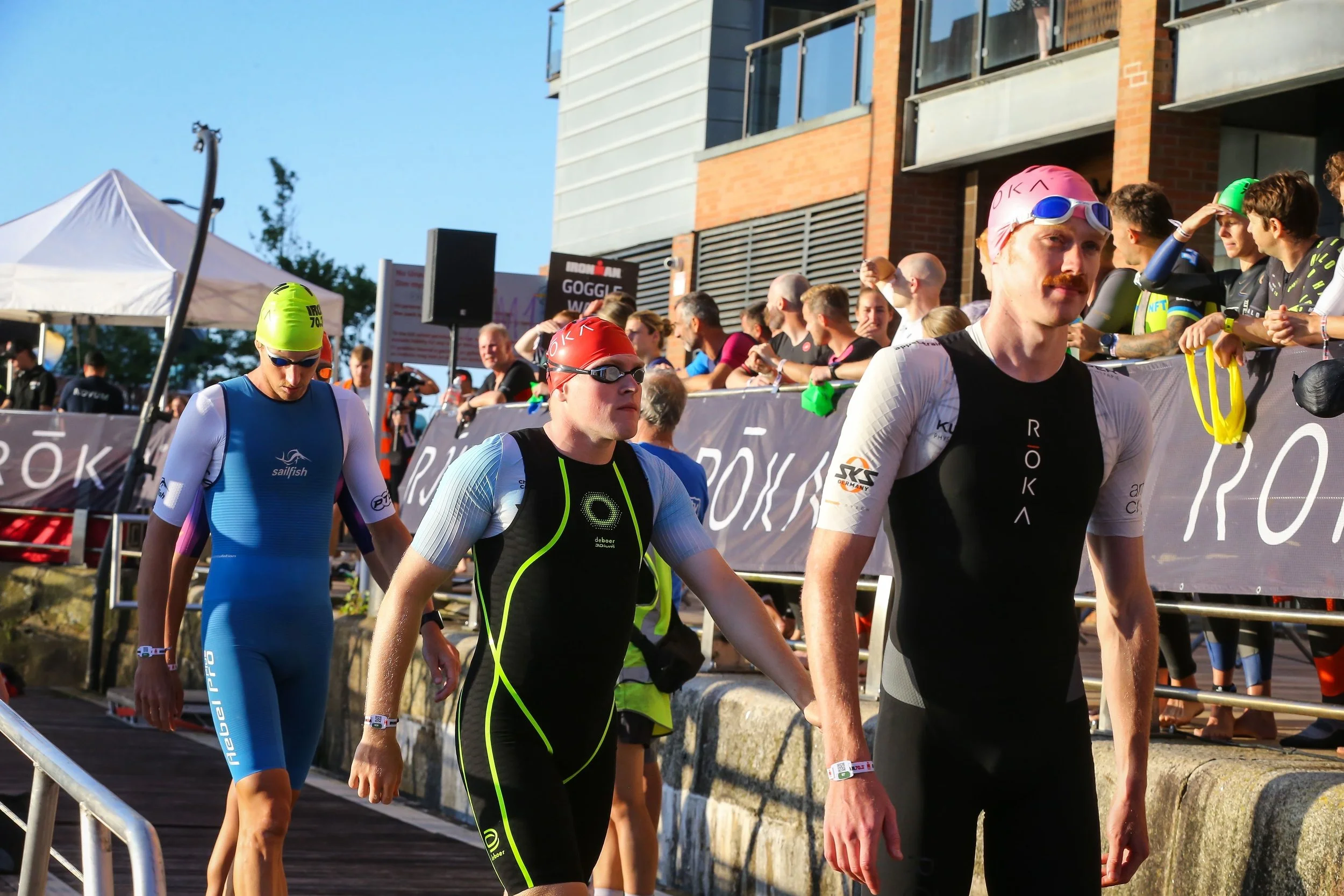
3. Swim Gear
Swimming equipment is relatively simple.
Swimwear
For pool-based races:
Swim shorts
Swimsuit
Trisuit (optional)
For open-water races:
Wetsuit
Many UK races require wetsuits due to water temperature.
A triathlon wetsuit helps:
Buoyancy
Warmth
Confidence in open water
You do not need the most expensive wetsuit.
Fit matters much more.
Goggles
Bring:
Your main pair
A spare pair (always!)
Test goggles before race day.
Nothing ruins confidence faster than leaking goggles.
4. Running Shoes
This is one area worth investing in.
Choose running shoes that:
Feel comfortable
Suit your running style
Have already been tested in training
Most importantly:
Never race in brand-new shoes.
Your first triathlon is not the time for experimentation.
At Frederick Webb Triathlon, athletes are encouraged to prioritise comfort over trends.
5. Comfortable Clothing
You have a few options here.
Option 1: Wear Regular Training Clothes
Many beginners simply wear:
Swim kit
Cycling top
Running clothes
Completely acceptable.
Option 2: Buy a Trisuit
A trisuit is designed for:
Swimming
Cycling
Running
Without changing clothes.
Benefits include:
Convenience
Comfort
Faster transitions
However:
A trisuit is useful—not essential.
For a first sprint triathlon, simple clothing often works perfectly.
6. Basic Nutrition and Hydration
For sprint triathlons, nutrition requirements are relatively simple.
Bring:
Water Bottle
Hydration matters.
Electrolytes (Optional)
Helpful on warm days.
Simple Fuel
For longer races, energy gels or bars may help.
But for many sprint beginners:
Good breakfast + hydration is often enough.
Never try unfamiliar products on race day.
7. A Way to Carry Your Gear
A simple gym bag or backpack works well.
Pack essentials:
Helmet
Shoes
Towel
Water bottle
Spare clothing
Nutrition
Race information
Lay everything out neatly in transition.
Organisation reduces stress massively.
8. A Towel (The Most Overlooked Item)
Many beginners forget this.
A towel helps:
Dry feet after swimming
Organise transition space
Keep equipment tidy
Simple—but useful.
9. Elastic Laces (Helpful, But Optional)
Elastic laces allow faster transitions by turning running shoes into slip-ons.
Benefits:
Saves time
Easier transitions
Beginner-friendly
But again:
Not essential.
Focus on comfort first.
What You Do NOT Need for Your First Triathlon
This is where beginners often overspend.
You probably do not need:
Carbon Wheels
Expensive Triathlon Bike
Power Meter
Aero Helmet
Deep Race Wheels
High-End GPS Watch
Premium Race Kit
These things may improve performance later, but they are not necessary for finishing and enjoying your first race.
Save money until you know you love the sport.
The Best Investment: Coaching
Instead of overspending on gear, one of the smartest investments is coaching.
Many beginners struggle with:
Swim confidence
Training structure
Race nerves
Pacing mistakes
Equipment confusion
Frederick Webb Triathlon helps athletes by providing:
Beginner-friendly coaching plans
Equipment guidance
Swim, bike, and run support
Strength and conditioning advice
Race-day confidence
Better preparation almost always beats expensive equipment.
Race-Day Checklist for Beginners
Essential Gear:
✅ Bike
✅ Helmet
✅ Running shoes
✅ Swimwear/wetsuit
✅ Goggles
✅ Water bottle
✅ Comfortable clothing
✅ Towel
Helpful Extras:
✅ Sunglasses
✅ Elastic laces
✅ Energy snack
✅ Spare goggles
Keep it simple.
Final Thoughts
The biggest myth in triathlon is that you need loads of expensive equipment.
You do not.
For your first triathlon, focus on:
Comfort
Reliability
Confidence
Consistency in training
Simple gear is more than enough to get started.
At Frederick Webb Triathlon, beginner athletes are coached to train smarter, reduce overwhelm, and enjoy the experience without unnecessary expense.
Because your first triathlon should be about achievement—not worrying about equipment.
Start simple, race confidently, and enjoy the journey.
How Many Hours Per Week Do You Need to Train for Triathlon?
Learn how many hours per week you really need to train for triathlon, from sprint races to Ironman, with expert advice from Frederick Webb Triathlon.
One of the most common questions beginner and experienced athletes ask is:
“How many hours per week do I actually need to train for triathlon?”
The answer is reassuring for many athletes:
Probably less than you think.
You do not need to train like a professional athlete to successfully complete a triathlon, improve performance, or even prepare for an Ironman. The right amount of training depends on your goals, experience, lifestyle, and race distance.
At Frederick Webb Triathlon, coaching focuses on helping athletes train smarter—not simply longer. The aim is to maximise performance while balancing work, family life, recovery, and long-term progression.
If you are wondering how much training you really need, this guide will break it down by race distance and ability level.
The Biggest Myth About Triathlon Training
One of the biggest misconceptions in triathlon is:
“More hours always equals better results.”
In reality, training quality matters more than endless volume.
Many athletes struggle because they:
Train too much
Recover too little
Follow unrealistic plans
Burn out quickly
The best triathlon training programmes balance:
Endurance
Recovery
Strength work
Lifestyle demands
Consistency
For most athletes:
Consistent smart training beats inconsistent massive training weeks.
Training Hours for Sprint Triathlon
A sprint triathlon usually consists of:
750m swim
20km bike
5km run
For beginners, sprint triathlon training is very achievable.
Beginner Sprint Triathlon
4–6 hours per week
Example schedule:
2 swims
2 bike sessions
2 runs
1 short strength session
This is enough for many athletes to complete their first race confidently.
Intermediate Sprint Athlete
5–7 hours per week
More structured sessions can help improve speed and performance.
You do not need huge volume for sprint racing.
Quality matters.
Training Hours for Olympic Distance Triathlon
Olympic distance racing includes:
1.5km swim
40km bike
10km run
Because of the longer duration, slightly more training is required.
Beginner Olympic Distance
5–8 hours per week
Focus areas:
Endurance development
Swim confidence
Consistent running
Intermediate Olympic Athlete
7–10 hours per week
Training often becomes more structured with:
Brick sessions
Threshold efforts
Longer bike rides
Again:
You still do not need professional-level training hours.
Training Hours for Half Ironman (70.3)
A 70.3 requires:
1.9km swim
90km bike
21.1km run
This distance needs more endurance preparation.
Beginner 70.3 Athlete
7–10 hours per week
Focus includes:
Longer endurance rides
Nutrition practice
Brick sessions
Intermediate Athlete
9–12 hours per week
Athletes targeting stronger performance may require additional specificity.
The goal remains sustainable consistency.
Training Hours for Full Ironman
An Ironman consists of:
3.8km swim
180km bike
42.2km marathon
This distance requires proper planning and gradual progression.
First-Time Ironman Athlete
8–12 hours per week
Peak training periods may occasionally reach:
12–15+ hours
But this should be built progressively.
Many beginners make the mistake of jumping into huge training loads too early.
Competitive Ironman Athlete
12–16+ hours per week
Athletes targeting Age Group qualification or major performance goals often require more structured training.
However:
More hours only work if recovery supports them.
Your Lifestyle Matters More Than You Think
One of the biggest mistakes athletes make is trying to copy elite training plans.
Professional athletes:
Recover between sessions
Sleep more
Train full time
Most age-group athletes balance:
Work
Family commitments
Stress
Travel
This changes recovery capacity significantly.
At Frederick Webb Triathlon, plans are designed around:
Real life.
Because the best training plan is the one you can consistently follow.
Training Quality Beats Training Quantity
You do not need endless hours if training is structured properly.
A good training week should include:
Key Sessions
Your most important workouts.
Recovery
Where fitness gains actually happen.
Strength and Conditioning
For durability and injury prevention.
Easy Endurance
Building aerobic fitness.
Many athletes improve more by training smarter than simply training longer.
Strength and Conditioning Saves Time
One overlooked way to improve performance is strength training.
Benefits include:
Injury prevention
Better running economy
Increased bike power
Improved posture and resilience
Even:
1–2 short sessions per week
Can make a major difference.
Frederick Webb Triathlon integrates strength work into programmes to help athletes maximise performance without unnecessary volume.
Signs You Are Training Too Much
Sometimes more training becomes counterproductive.
Warning signs include:
Constant fatigue
Poor sleep
Reduced motivation
Heavy legs every session
Declining performance
If this sounds familiar:
You may need more recovery—not more training.
Consistency over months matters far more than occasional huge weeks.
Example Weekly Training Hours by Goal
First Sprint Triathlon
4–6 hours
Improve Fitness
5–7 hours
Olympic Distance
6–9 hours
Half Ironman
7–12 hours
Full Ironman
8–15+ hours
These are general ranges.
Everyone responds differently.
Why Coaching Helps You Train Efficiently
One of the biggest challenges in triathlon is knowing:
How much is enough?
Many athletes either:
Undertrain
Overtrain
Follow unrealistic plans
Frederick Webb Triathlon provides:
Personalised training plans
Time-efficient programming
Recovery management
Strength and conditioning integration
Ongoing support and adjustments
This helps athletes maximise results while fitting training around real life.
Final Thoughts
The right number of triathlon training hours depends on your goals, experience, and lifestyle.
But here is the truth:
You do not need huge training hours to become a successful triathlete.
What matters most is:
Consistency
Smart programming
Recovery
Structured progression
At Frederick Webb Triathlon, athletes are coached to train efficiently, avoid burnout, and improve performance without unnecessary volume.
Because smarter training almost always beats simply training more.
The Biggest Beginner Triathlon Mistakes (And How to Avoid Them)
New to triathlon? Learn the biggest beginner triathlon mistakes and how to avoid them with expert coaching advice from Frederick Webb Triathlon.
Starting triathlon is exciting. Whether you are training for your first sprint triathlon, aiming to improve fitness, or simply looking for a new challenge, triathlon can quickly become addictive. But like any sport, beginners often make avoidable mistakes that can lead to frustration, injury, poor race experiences, or burnout.
The good news?
Most beginner triathlon mistakes are completely avoidable with the right structure and mindset.
At Frederick Webb Triathlon, beginner athletes are coached to train smarter, build confidence, and enjoy the process without becoming overwhelmed.
If you are new to triathlon, here are the biggest beginner mistakes—and exactly how to avoid them.
Mistake 1: Doing Too Much, Too Soon
One of the biggest mistakes beginner triathletes make is trying to train like experienced athletes immediately.
You start following elite athletes online, see huge training weeks, and suddenly think:
“I need to train every day.”
This often leads to:
Fatigue
Injury
Loss of motivation
Burnout
The reality is:
Consistency beats intensity.
Beginners improve fastest through sustainable progression.
Instead of doing massive training weeks, focus on:
Regular swim sessions
Consistent bike rides
Steady running
Recovery days
A simple, balanced programme always beats random hard training.
Mistake 2: Ignoring Swim Technique
Swimming is usually the most intimidating discipline for beginners.
Many athletes try to improve simply by swimming harder.
Unfortunately:
Poor technique + more distance = poor technique for longer.
Swimming efficiency matters far more than brute fitness early on.
Common swim mistakes include:
Holding breath
Swimming too tense
Poor body position
Fighting the water
The solution?
Focus on:
Breathing rhythm
Relaxation
Technique drills
Consistency
At Frederick Webb Triathlon, beginner swimmers focus on confidence and efficiency before speed.
Mistake 3: Spending Too Much Money on Equipment
Triathlon can seem expensive.
Many beginners believe they need:
Expensive bikes
Carbon wheels
Aero helmets
Premium race kit
The truth:
You do not need fancy gear to complete your first triathlon.
For most beginners:
A safe bike, comfortable running shoes, swim kit, and helmet are enough.
Fitness matters far more than expensive equipment.
Start simple.
Upgrade later if you enjoy the sport.
Mistake 4: Running Too Hard Every Session
Running feels simple, so beginners often push every session hard.
This is one of the fastest ways to get injured.
Most triathlon running should feel:
Comfortably easy.
Easy running improves:
Aerobic fitness
Recovery
Endurance
Consistency
Hard sessions should be used strategically—not every day.
The biggest gains usually come from consistent, manageable training.
Mistake 5: Neglecting Recovery
Many beginners believe rest equals laziness.
In reality:
Recovery is part of training.
Skipping recovery often leads to:
Poor motivation
Injury
Fatigue
Reduced performance
Recovery should include:
Sleep
Aim for quality sleep consistently.
Easier Sessions
Not every workout should feel difficult.
Rest Days
Essential for long-term progress.
Frederick Webb Triathlon programmes recovery deliberately to help athletes improve safely.
Mistake 6: Avoiding Brick Sessions
One surprise for beginner triathletes:
Running after cycling feels strange.
Very strange.
Your legs may feel heavy or awkward at first.
This is normal.
That is why brick training matters.
A brick session simply means:
Bike → Run
Example:
30-minute ride
Immediately followed by:
10–15 minute run
Benefits include:
Better race confidence
Improved pacing
Reduced race-day shock
Practising transitions between disciplines builds confidence quickly.
Mistake 7: Poor Race-Day Pacing
Beginner triathletes often make the same mistake:
Starting too fast.
Excitement and adrenaline can cause athletes to:
Swim too hard
Ride aggressively
Blow up on the run
Instead:
Start controlled.
A good beginner pacing strategy:
Swim
Steady and calm.
Bike
Comfortable effort.
Run
Gradually build effort if you feel strong.
Remember:
Finishing strong feels much better than surviving the final kilometres.
Mistake 8: Skipping Open Water Practice
If your triathlon includes open water, pool swimming alone is not enough.
Open water feels different because of:
Cold temperatures
Crowds
No lane lines
Reduced visibility
Beginners often panic simply because conditions feel unfamiliar.
Open water practice builds:
Confidence
Navigation skills
Calmness
The more familiar it feels, the easier race day becomes.
Mistake 9: Comparing Yourself to Others
Social media makes comparison easy.
You see experienced triathletes:
Training huge hours
Riding expensive bikes
Posting fast times
And suddenly feel behind.
Remember:
Everyone starts somewhere.
Focus on:
Your progress
Your consistency
Your confidence
Your first triathlon is about learning—not perfection.
Progress matters more than comparison.
Mistake 10: Overcomplicating Everything
Beginners often become overwhelmed by:
Nutrition plans
Training zones
Equipment choices
Data tracking
You do not need to master everything immediately.
Keep it simple:
Train consistently
Recover properly
Build confidence
Enjoy the process
The basics work.
Why Coaching Helps Beginners Avoid Mistakes
Triathlon can feel overwhelming at first.
Many beginners struggle with:
Knowing how much to train
Swim confidence
Race preparation
Avoiding injury
Building consistency
Frederick Webb Triathlon provides:
Beginner-friendly coaching plans
Swim, bike, and run guidance
Strength and conditioning support
Race-day confidence strategies
Personalised training around busy lifestyles
Coaching removes guesswork and helps beginners progress with confidence.
Final Thoughts
Every triathlete makes mistakes—but avoiding the biggest beginner errors can make your first race far more enjoyable.
Success in triathlon is not about perfection.
It comes from:
Consistency
Smart pacing
Recovery
Confidence
Patience
At Frederick Webb Triathlon, beginner athletes are coached to train smarter, avoid overwhelm, and build long-term confidence in the sport.
Because the goal is not just finishing one race — It is enjoying the journey and becoming a stronger athlete along the way.