

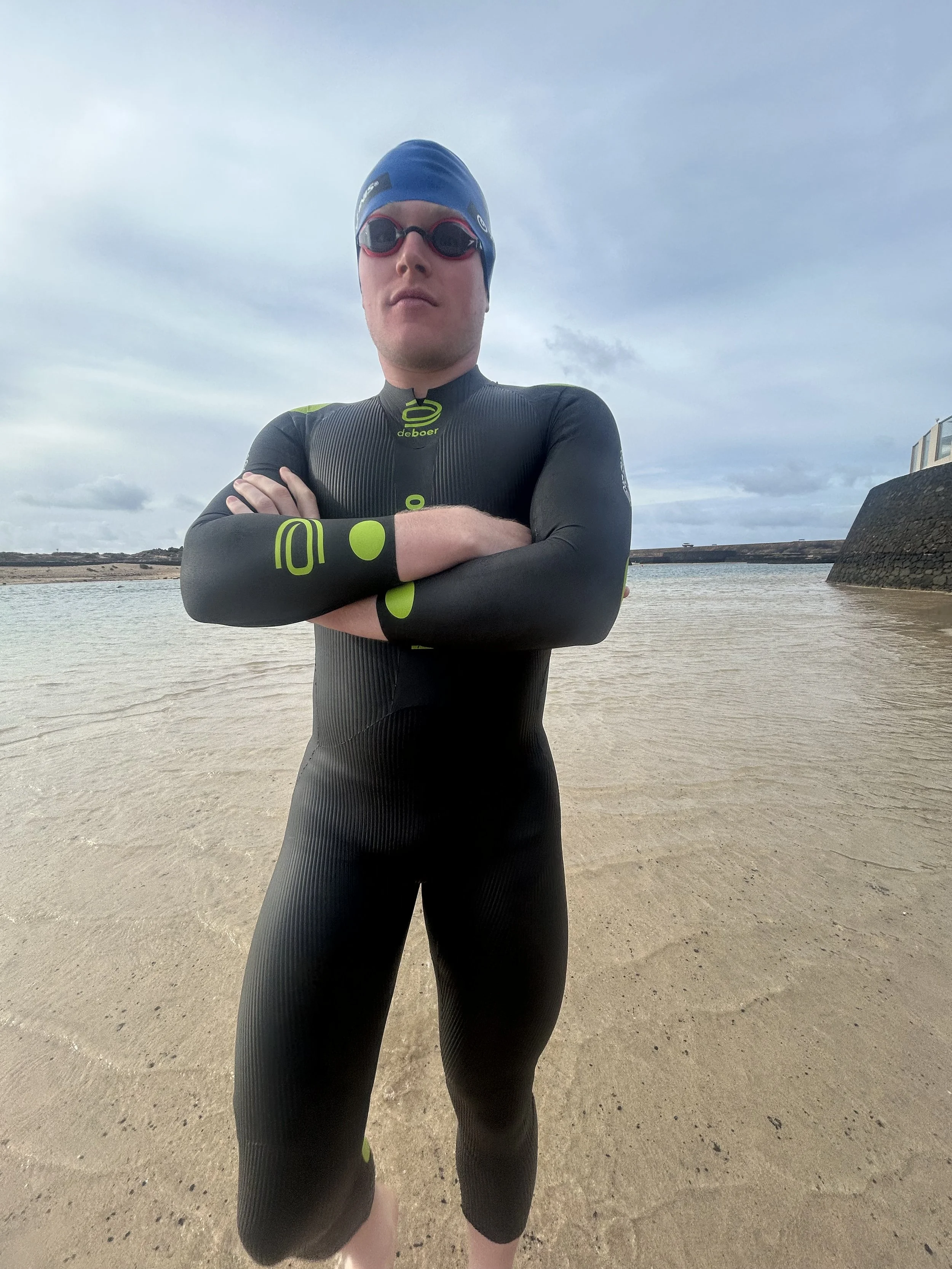
Open Water Swimming Tips for Nervous Swimmers: How to Build Confidence and Stay Calm
Feeling nervous about swimming in open water? You are not alone. Discover practical open water swimming tips to overcome fear, build confidence, and enjoy triathlon swimming with less anxiety.
If the thought of swimming in open water makes your heart race, you are far from alone.
For many triathletes and beginner swimmers, open water can feel intimidating. Dark water, limited visibility, crowds at race starts, cold temperatures, and the feeling of losing control can quickly turn excitement into anxiety.
The important thing to know is this:
Feeling nervous about open water swimming is completely normal.
Even experienced triathletes have moments of anxiety before races.
The difference is that confident swimmers have learned strategies to stay calm, controlled, and prepared.
At Frederick Webb Triathlon, we regularly coach athletes who feel nervous about open water swimming. With the right approach, confidence grows quickly, and many swimmers go from fear to genuinely enjoying the experience.
Here are the best open water swimming tips for nervous swimmers to help you feel calmer, safer, and more confident.
1. Start Small and Remove Pressure
One of the biggest mistakes nervous swimmers make is trying to do too much too soon.
Jumping straight into deep water or busy swim groups can increase anxiety.
Instead, build confidence gradually.
Start with:
Short swims close to shore
Calm, safe venues
Small confidence-building sessions
Simple goals
Your first session does not need to be 2 kilometres.
Sometimes success simply means:
Getting into the water
Floating comfortably
Swimming for 2–5 minutes
Feeling calm
Confidence grows through positive experiences.
At Frederick Webb Triathlon, we often tell athletes:
“Progress over pressure.”
Every comfortable swim builds trust in yourself.
2. Practise in a Safe Environment
Environment matters hugely when learning open water swimming.
Choose locations with:
Safety support
Lifeguards or organised sessions
Clear entry and exit points
Calm conditions
For athletes training near Bath and Bristol, supervised open water venues are ideal for building confidence without unnecessary stress.
Swimming alone when nervous is rarely the best approach.
Training with a coach or supportive group can massively reduce anxiety.
Knowing help is nearby instantly lowers stress levels.
3. Wear the Right Equipment
Sometimes confidence starts with feeling physically comfortable.
Good kit can make open water feel much easier.
Wetsuit
A properly fitted triathlon wetsuit provides:
Extra buoyancy
Warmth
Better body position
Increased confidence
Many nervous swimmers are surprised by how much easier swimming feels once wearing a wetsuit.
Bright Swim Hat
A brightly coloured swim cap improves visibility and reassurance.
Goggles That Fit Properly
Foggy or leaking goggles can instantly trigger panic.
Test your goggles beforehand and bring a spare pair if possible.
Feeling prepared reduces nerves significantly.
4. Learn to Float and Stop
Many nervous swimmers fear:
“What if I panic and can’t continue?”
The reality is:
You can stop.
At any point.
Open water swimming is not about forcing yourself to push through fear.
Practise:
Floating on your back
Treading water
Breaststroke recovery
Looking around calmly
Knowing you can stop whenever needed gives you control.
Control reduces fear.
One of the most reassuring lessons for nervous swimmers is realising:
You do not have to swim freestyle nonstop.
Taking breaks is normal.
5. Control Your Breathing First
Anxiety often begins with breathing.
Cold water or nerves can trigger shallow, rapid breathing.
This can quickly feel like panic.
Before swimming, pause and settle yourself.
Try:
Slow deep breaths
Long exhales
Relaxed shoulders
Calm entry into the water
Once in the water, avoid sprinting.
Start gently and allow your breathing to settle naturally.
A useful mindset is:
“Slow is smooth. Smooth is fast.”
If panic rises:
Stop swimming
Float or tread water
Take slow breaths
Reset calmly
Confidence comes from learning how to recover.
6. Do Not Compare Yourself to Others
Open water swimming can feel intimidating when experienced swimmers seem relaxed.
Remember:
Everyone starts somewhere.
Many confident swimmers were once terrified of open water too.
Your journey is yours.
Focus on:
Your comfort
Your progress
Your confidence gains
A successful swim is not about distance.
Sometimes success is simply:
“I felt calmer than last time.”
That is progress.
7. Practise Sighting
One thing that unsettles nervous swimmers is feeling disoriented.
In the pool, you follow lane lines.
Open water feels different.
This is where sighting becomes important.
Every few strokes:
Lift eyes slightly forwards
Spot a buoy or landmark
Return to relaxed swimming
This prevents zig-zagging and helps you feel more in control.
The more orientated you feel, the calmer you become.
8. Simulate Race Conditions Gradually
Race-day anxiety often comes from unfamiliarity.
Large triathlon swim starts can feel overwhelming.
Rather than avoiding this completely, gradually expose yourself to it.
Practise:
Swimming around others
Mild contact situations
Group starts
Buoy turns
Confidence grows through familiarity.
Nothing should feel completely new on race day.
9. Focus on Enjoyment, Not Survival
This may sound surprising, but one of the biggest mindset shifts is learning to enjoy open water.
Instead of thinking:
“I just need to survive this.”
Try:
“I’m learning something new.”
Open water swimming can become:
Peaceful
Confidence-building
Empowering
Enjoyable
The more relaxed you become, the easier swimming feels.
Eventually, many nervous swimmers discover it becomes their favourite discipline.
10. Get Coaching and Support
Trying to overcome open water fear alone can feel overwhelming.
A supportive coach can:
Improve technique
Build confidence gradually
Reduce swim anxiety
Teach race-day strategies
At Frederick Webb Triathlon, we specialise in helping nervous swimmers become confident open water athletes through structured progression, personalised swim coaching, and supportive guidance.
Whether you are preparing for your first sprint triathlon or an Ironman, confidence in the water changes everything.
Final Thoughts
If you feel nervous about open water swimming, remember this:
You are not weak. You are not behind.
You are learning.
Confidence is built step by step.
Focus on:
✔ Starting small
✔ Breathing calmly
✔ Practising safely
✔ Building familiarity
✔ Letting confidence grow naturally
Open water swimming does not have to feel scary forever.
With the right support and consistent practice, it can become one of the most rewarding parts of triathlon.
At Frederick Webb Triathlon, we help nervous swimmers gain confidence through swim coaching, open water guidance, and race preparation support around Bath, Bristol, and globally online.
Ready to feel calmer and more confident in open water? Get in touch with Frederick Webb Triathlon and take the first step toward enjoying your swim training.

How to Swim Freestyle More Efficiently: 9 Expert Tips for Faster, Easier Swimming
Want to swim freestyle faster without feeling exhausted? Learn the key techniques to improve freestyle swimming efficiency, reduce drag, and swim smoother in both pool and open water triathlon events.
For many triathletes and swimmers, freestyle (front crawl) can feel exhausting. You may find yourself out of breath after only a few lengths, struggling to maintain rhythm, or feeling like everyone else glides through the water while you fight against it.
The good news? Swimming faster does not always mean working harder.
In fact, the best swimmers are usually the most efficient swimmers.
Learning how to swim freestyle more efficiently can help you conserve energy, improve endurance, and make swimming feel significantly easier — whether you're training for your first sprint triathlon or preparing for an Ironman.
At Frederick Webb Triathlon, we believe that small technical changes often create the biggest performance gains. Here are the key areas to focus on if you want to swim freestyle with less effort and more speed.
1. Improve Your Body Position
One of the biggest causes of inefficient freestyle swimming is poor body position.
Think of your body like a boat. The more drag you create, the harder you have to work.
Many swimmers allow their hips and legs to sink, creating resistance and slowing themselves down.
Instead, focus on maintaining a long, flat body position near the surface of the water.
Key tips:
Keep your head neutral
Look slightly down rather than forwards
Engage your core muscles
Keep hips high in the water
A simple adjustment in posture can instantly make swimming feel smoother and easier.
A useful cue is:
“Swim downhill.”
By keeping your chest slightly pressed into the water, your hips naturally rise and your body becomes more streamlined.
2. Stop Overkicking
Many beginner swimmers believe kicking harder equals swimming faster.
Usually, the opposite happens.
Excessive kicking wastes energy and raises your heart rate — something especially problematic in triathlon where you still have cycling and running ahead.
Efficient freestyle swimming uses a controlled, relaxed kick that supports body balance rather than powering every stroke.
For triathletes, a light 2-beat or 4-beat kick is often far more sustainable than aggressive sprint-style kicking.
Focus on:
Small kicks
Relaxed ankles
Movement initiated from the hips
Minimal splash
If your legs feel exhausted early in a session, you are likely kicking too hard.
3. Lengthen Your Stroke
One of the quickest ways to improve freestyle efficiency is increasing distance per stroke.
This means travelling further with every arm pull instead of spinning your arms faster.
The goal is not to glide excessively, but to create a long, controlled stroke.
Think about:
Reaching forwards before beginning the pull
Rotating through the body
Finishing the stroke fully past the hip
Holding water effectively
A great drill to improve this is counting strokes per length.
Try reducing your stroke count while maintaining pace. This teaches efficiency rather than brute force.
4. Learn Proper Breathing Technique
Poor breathing is one of the biggest reasons freestyle feels difficult.
Many swimmers lift their head too high to breathe, causing hips to sink and rhythm to disappear.
Efficient breathing should feel natural and relaxed.
Instead of lifting your head:
Rotate your body and turn your head slightly to the side.
Keep:
One goggle in the water
One goggle out
Chin low
Body rotating naturally
The biggest breathing mistake?
Holding your breath underwater.
Instead, continuously exhale while your face is submerged. This prevents carbon dioxide build-up and reduces panic or breathlessness.
A relaxed swimmer is always a faster swimmer.
5. Rotate Your Body Properly
Freestyle is not just an arm sport.
Efficient swimmers use the entire body.
Good freestyle technique involves rotating through the hips and torso, allowing stronger muscles to contribute to propulsion.
Without rotation:
Your shoulders work harder
Stroke shortens
Fatigue increases
Speed decreases
Imagine swimming “side to side” slightly rather than completely flat.
Rotation improves:
Reach
Power
Breathing
Stroke rhythm
For triathletes, this becomes especially important in open-water swimming where maintaining rhythm matters.
6. Fix Your Catch Position
Your “catch” is the moment your hand enters and begins pulling water.
A common mistake is pressing downward instead of backwards.
This wastes energy and lifts the body instead of moving you forwards.
Instead, aim for an Early Vertical Forearm (EVF) position.
This means:
Fingertips point downward
Elbow stays high
Forearm catches water
Pressure moves backwards
Think:
“Grab the water and pull yourself past it.”
Efficient swimmers feel pressure on the forearm, not just the hand.
This creates significantly more propulsion with less effort.
7. Relax More Than You Think
Tension kills swim efficiency.
Many swimmers:
Clench fists
Tighten shoulders
Kick aggressively
Fight the water
Fast swimmers often look effortless because they are relaxed.
Try to:
Relax shoulders
Keep hands soft
Maintain rhythm
Swim smoothly rather than forcefully
Remember:
Water rewards patience and rhythm — not aggression.
The more relaxed you become, the more efficient your freestyle swimming will feel.
8. Use Swim Drills to Reinforce Technique
Technique does not improve just by swimming laps.
Specific drills help retrain movement patterns.
Some of the best drills for freestyle efficiency include:
Catch-Up Drill
Improves stroke timing and extension.
Fingertip Drag Drill
Encourages high elbow recovery.
Side Kick Drill
Develops balance and body position.
Single Arm Freestyle
Improves catch awareness and coordination.
Pull Buoy Swimming
Helps focus on upper-body mechanics and body alignment.
At Frederick Webb Triathlon, we regularly use targeted drills to help swimmers improve efficiency quickly — particularly those preparing for triathlon or overcoming swim anxiety.
9. Get Your Technique Analysed
The reality is that most swimmers cannot see their own mistakes.
Small technical flaws often feel normal.
This is why professional feedback can accelerate progress dramatically.
A minor correction in:
breathing
hand entry
body position
kick timing
can instantly improve efficiency and confidence.
For triathletes, efficient freestyle swimming means:
Lower heart rate
More energy for the bike and run
Faster swim splits
Increased confidence in open water
Whether you're training for your first triathlon or chasing an Ironman personal best, improving freestyle efficiency is one of the highest-return investments you can make.
Final Thoughts
Swimming freestyle efficiently is not about brute strength.
It is about reducing resistance, improving rhythm, and making every stroke count.
Focus on:
✔ Better body position
✔ Controlled breathing
✔ A longer stroke
✔ Relaxed movement
✔ Smart technique drills
The result?
You will swim faster, feel smoother, and use less energy.
At Frederick Webb Triathlon, we help athletes improve swim efficiency through personalised coaching, stroke analysis, and open-water swim preparation for triathlon racing. Whether you're a beginner swimmer or preparing for long-course racing, improving your freestyle technique could be the breakthrough your training needs.
Ready to swim faster with less effort? Get in touch with Frederick Webb Triathlon to improve your freestyle technique and triathlon swim confidence.
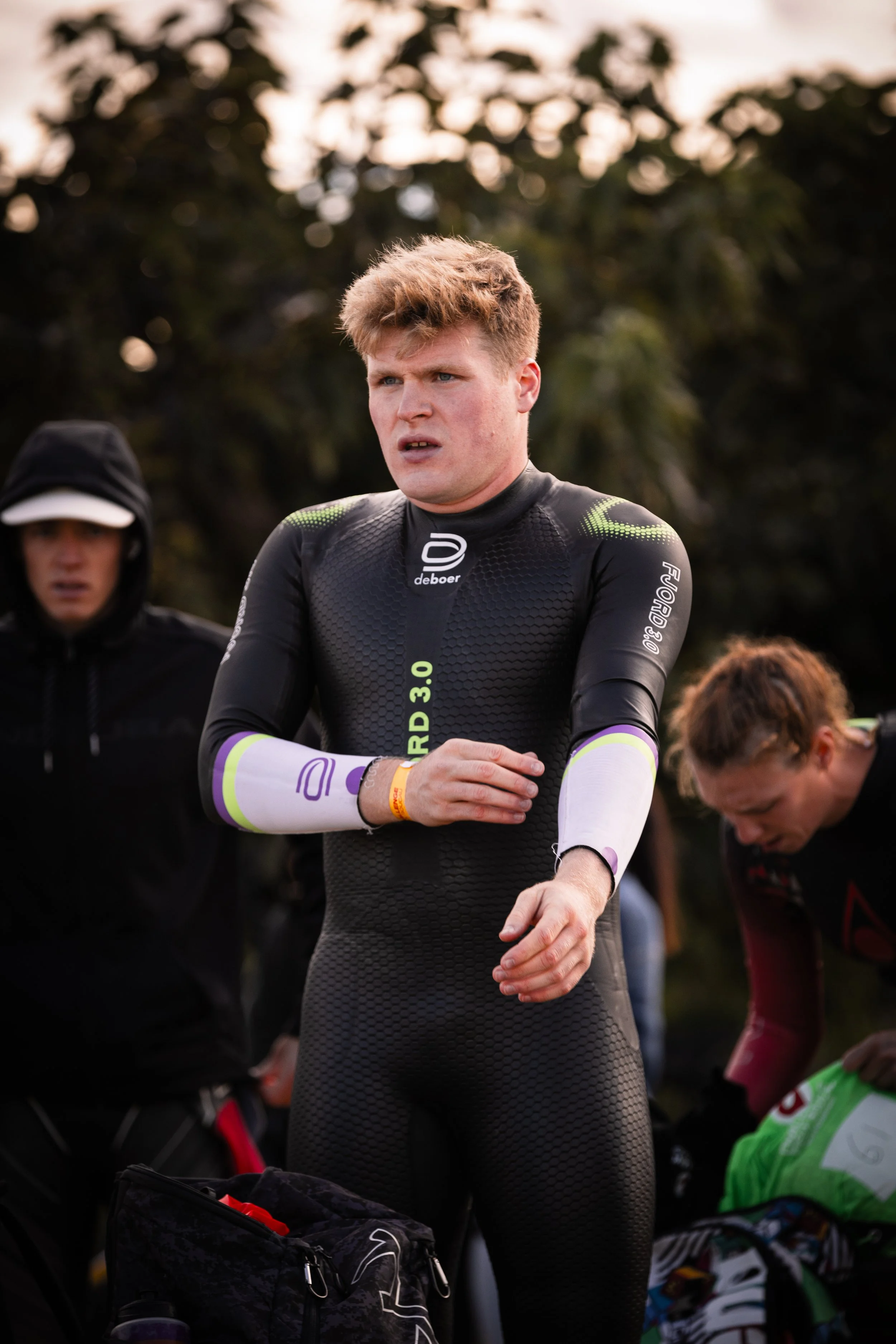
The 5 Best Swim Drills for Beginner Swimmers
Looking to become a better swimmer? These 5 beginner swim drills will help improve technique, breathing, balance, and confidence in the water for triathlon and fitness swimming.
Swimming can feel frustrating when you first start. Many beginner swimmers and triathletes feel exhausted after only a few lengths, even when they are fit in other sports. The reason is usually technique rather than fitness.
Swim drills are one of the fastest ways to improve efficiency, confidence, and control in the water. At Frederick Webb Triathlon, beginner swimmers use structured drills to build strong fundamentals that transfer directly into faster and easier swimming.
The goal is not to swim harder — it is to swim better.
Here are five of the best swim drills every beginner swimmer should learn.
1. Catch-Up Drill
The catch-up drill is one of the best drills for improving body position and stroke timing.
How It Works
Instead of continuous freestyle strokes, one arm remains extended in front until the other arm “catches up.”
This slows the stroke down and encourages better control.
Benefits
Improves stroke timing
Encourages longer reach
Builds balance in the water
Prevents rushed swimming
Improves front-end glide
Coaching Tip
Avoid pausing completely at the front. Keep the movement smooth and controlled.
This drill is especially useful for swimmers who feel rushed or chaotic during freestyle.
2. Side Kick Drill
Balance and rotation are essential in freestyle swimming, and the side kick drill develops both.
How It Works
Kick on one side with one arm extended forward and the lower arm resting by your side. Rotate your head to breathe while maintaining body alignment.
Benefits
Improves body rotation
Builds balance
Develops breathing confidence
Strengthens kicking rhythm
Improves streamlined position
Coaching Tip
Keep one goggle in the water while breathing to avoid lifting the head too high.
This drill is excellent for triathletes struggling with breathing control.
3. Fingertip Drag Drill
Many beginner swimmers recover their arms too wide or with excessive tension. The fingertip drag drill improves recovery mechanics.
How It Works
During recovery, lightly drag your fingertips across the water surface before re-entering.
Benefits
Encourages high elbows
Reduces shoulder tension
Improves recovery path
Promotes smoother stroke mechanics
Builds relaxed swimming rhythm
Coaching Tip
Focus on relaxed shoulders rather than forcing exaggerated movements.
Efficient swimmers look relaxed because unnecessary tension has been removed.
4. Single Arm Freestyle Drill
This drill isolates one arm at a time to improve coordination and catch mechanics.
How It Works
Swim freestyle using only one arm while the other stays extended in front or resting by your side.
Benefits
Improves catch awareness
Develops stronger pull mechanics
Enhances body rotation
Improves breathing timing
Builds coordination
Coaching Tip
Use fins if needed to help maintain momentum and balance.
This drill quickly exposes technical weaknesses and improves feel for the water.
5. 6-1-6 Drill
The 6-1-6 drill combines kicking, rotation, and freestyle timing into one movement.
How It Works
Kick six times on one side, take one freestyle stroke, then rotate and kick six times on the opposite side.
Benefits
Improves timing and rhythm
Builds rotational control
Encourages balance
Develops breathing confidence
Improves stroke connection
Coaching Tip
Stay patient during the kicking phase and focus on maintaining body alignment.
This is one of the best drills for beginner triathletes transitioning into smoother freestyle swimming.
Why Drills Matter for Triathletes
Triathlon swimming is not just about fitness. Good technique saves huge amounts of energy across longer distances.
Effective swim drills help athletes:
Reduce drag
Improve breathing efficiency
Build open water confidence
Swim faster with less effort
Reduce panic during races
Develop consistency
At Frederick Webb Triathlon, swim coaching focuses heavily on technical development because technique improvements often produce larger gains than fitness alone.
How Often Should You Practise Drills?
Beginner swimmers should include drills in almost every session.
A simple structure could include:
Warm-up
10-20 minutes of drills
Main swim set
Cool down
Repeating drills consistently helps reinforce movement patterns over time.
Do not rush through them. Quality matters far more than speed.
Common Beginner Swim Mistakes
Trying to Swim Too Hard
Most beginners fight the water rather than learning to move through it smoothly.
Skipping Technique Work
Swimming endless lengths with poor technique reinforces bad habits.
Holding Breath
Exhaling underwater is essential for relaxed breathing.
Poor Consistency
Swimming once every two weeks makes improvement difficult.
Comparing Yourself to Experienced Swimmers
Swimming technique takes time and repetition to develop.
The Value of Swim Coaching
Having experienced coaching can dramatically speed up progress. Many technical mistakes are difficult to feel without external feedback.
Frederick Webb Triathlon provides structured swim coaching for beginner and intermediate triathletes, helping athletes improve confidence, efficiency, and race performance in both pool and open water environments.
With proper coaching and consistent practice, swimming can become one of the most enjoyable and rewarding parts of triathlon training.
Final Thoughts
The best swim drills simplify swimming and help you build efficient movement patterns step by step.
You do not need perfect fitness to become a better swimmer. You need consistency, patience, and good technical habits.
These five drills provide an excellent foundation for beginner swimmers and triathletes looking to improve confidence, efficiency, and speed in the water.
Over time, small technical improvements lead to massive performance gains — not just in the swim, but across your entire triathlon race.
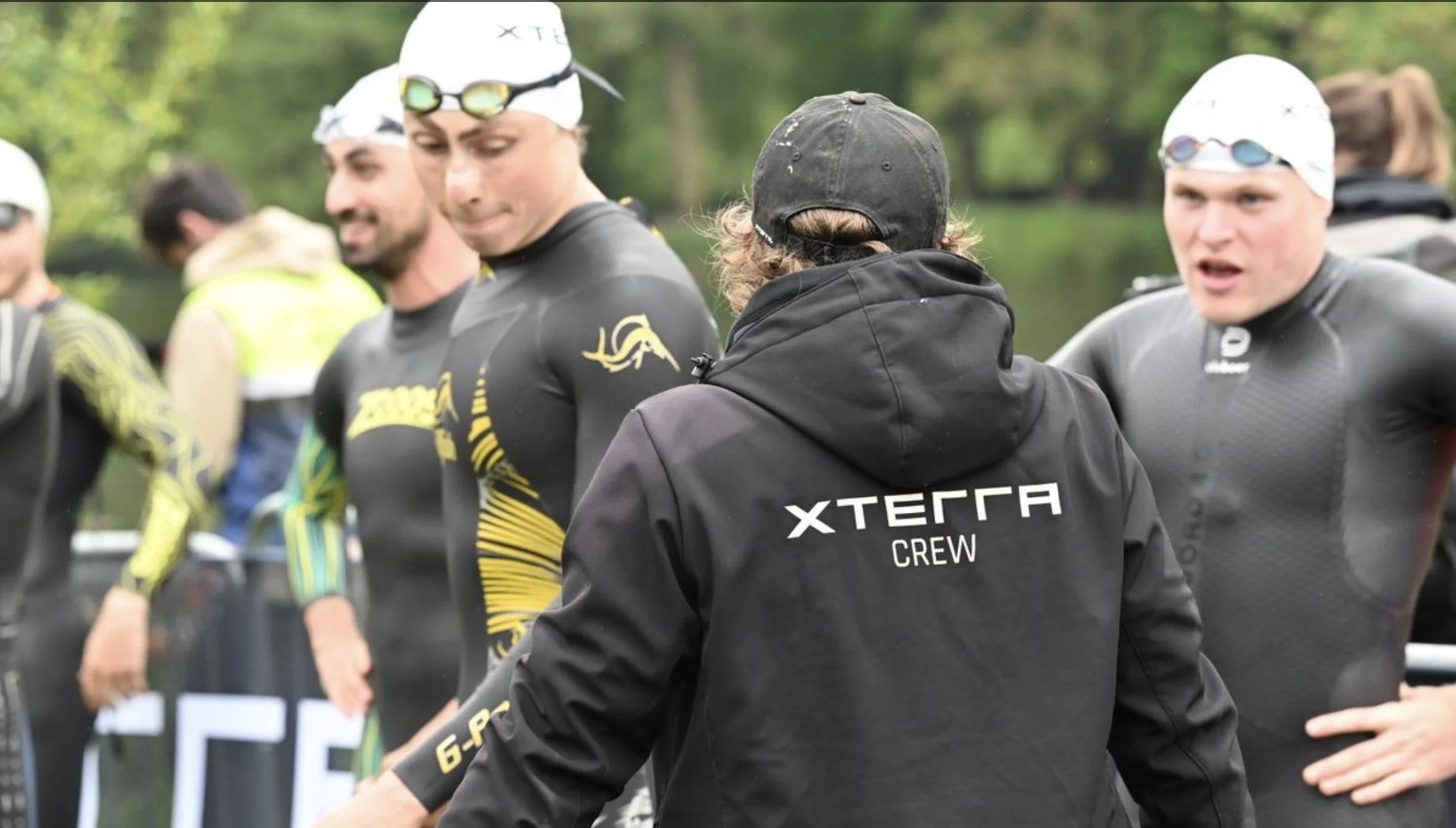
How to Improve Your Swim Technique for Triathlon
Want to swim faster without wasting energy? Learn how to improve your swim technique for triathlon with simple coaching tips that increase efficiency, confidence, and speed in both pool and open water swimming.
For many triathletes, swimming is the most intimidating part of the sport. Unlike cycling and running, poor technique in the water can massively limit your performance no matter how fit you are. The good news is that improving your swim technique can make you significantly faster while actually using less energy.
At Frederick Webb Triathlon, one of the biggest breakthroughs athletes experience is realising that swimming is not just about fitness — it is about efficiency, rhythm, and confidence in the water. Whether you are training for your first sprint triathlon or preparing for an Ironman, improving your swim technique can completely change your race experience.
Why Swim Technique Matters More Than Fitness
Swimming has a much higher technical demand than cycling or running. Small inefficiencies create huge amounts of drag in the water, meaning you waste energy fighting against resistance rather than moving forward.
A stronger athlete with poor technique will often lose to a technically efficient swimmer who is less fit.
Good swim technique helps you:
Swim faster with less effort
Reduce panic and anxiety in open water
Save energy for the bike and run
Improve breathing control
Increase confidence during races
Maintain better pacing over longer distances
Most beginner triathletes try to swim harder when they should focus on swimming smarter.
Focus on Body Position First
One of the most common problems in triathlon swimming is poor body position. If your hips and legs sink, drag increases dramatically and swimming becomes exhausting.
Think about keeping your body long and flat across the water surface. Your head position controls a lot of this. Looking too far forward causes the hips to drop.
Instead:
Keep your eyes looking slightly downward
Relax your neck
Keep your core engaged
Imagine being pulled forward from the top of your head
A streamlined body position immediately improves efficiency before you even think about stroke mechanics.
Improve Your Breathing Technique
Breathing is often the biggest challenge for beginner swimmers. Many athletes hold tension in the water and rush their breathing, which increases fatigue and anxiety.
A smoother breathing pattern helps you stay relaxed and controlled.
Key breathing tips:
Exhale continuously underwater
Avoid holding your breath
Rotate your body rather than lifting your head
Keep one goggle in the water during breaths
Practise bilateral breathing when possible
Open water racing becomes far easier when breathing feels controlled under pressure.
Learn Proper Rotation
Efficient freestyle swimming relies heavily on body rotation. Swimming flat limits power and strains the shoulders.
Good rotation allows you to:
Reach further with each stroke
Reduce shoulder stress
Engage stronger back muscles
Improve breathing position
Generate more propulsion
Your shoulders and hips should rotate together naturally as you swim. Think of swimming “on your side” rather than flat on your stomach.
Improve Your Catch and Pull
Many swimmers waste energy slipping through the water instead of holding it effectively.
The “catch” is the moment your hand enters the water and begins pulling backwards. A strong catch creates propulsion.
Focus on:
High elbows underwater
Pressing water backwards rather than down
Keeping fingertips angled slightly downward
Feeling pressure against the forearm
Swimming fast is not about windmilling your arms quicker. It is about holding more water with each stroke.
Reduce Stroke Rate Panic
In races, many triathletes dramatically increase stroke rate due to nerves and adrenaline. This usually reduces efficiency.
A smoother, longer stroke is often faster over long distances.
Try counting strokes per length during training. Lower stroke counts often indicate improved efficiency.
The aim is controlled rhythm rather than frantic movement.
Open Water Skills Matter
Pool swimming and open water swimming are very different experiences. Even technically strong swimmers can struggle outdoors without specific practice.
Important open water skills include:
Sighting
Swimming in groups
Turning around buoys
Managing contact
Adapting to waves and conditions
Controlling breathing under pressure
At Frederick Webb Triathlon, open water coaching sessions help athletes build confidence in realistic race environments rather than only relying on pool fitness.
Consistency Beats Massive Swim Sessions
Many triathletes try to improve swimming by doing one huge session each week. This rarely works.
Swimming responds best to frequency and repetition.
Three shorter technique-focused sessions per week usually produce better improvements than one exhausting swim.
Even 30-45 minute sessions focused on drills and quality movement can create huge progress over time.
Common Swim Technique Mistakes
Crossing Over
Hands entering across the centre line reduce balance and create instability.
Lifting the Head
Looking forward too much causes hips and legs to sink.
Kicking Too Hard
Triathletes often waste energy kicking aggressively. A relaxed, controlled kick is usually more efficient for long-course racing.
Tension
Tight shoulders and clenched hands increase fatigue quickly.
Poor Timing
Swimming should feel rhythmic and connected rather than rushed.
How Coaching Accelerates Progress
One of the hardest parts of swimming is that it is difficult to self-correct. What feels right is often very different from reality.
Video analysis and structured coaching can quickly identify technical flaws that may otherwise take years to fix.
Frederick Webb Triathlon provides swim coaching designed specifically for triathletes, helping athletes improve:
Stroke efficiency
Open water confidence
Race pacing
Swim endurance
Breathing control
Technique under fatigue
The biggest gains often come from small technical changes rather than simply training harder.
Final Thoughts
Improving your swim technique is one of the fastest ways to become a stronger triathlete. Better efficiency allows you to swim faster while conserving energy for the rest of the race.
The key is focusing on quality over quantity. Consistent technique work, smart drills, and structured coaching create lasting improvements far beyond simply swimming more metres.
Whether you are nervous about open water, chasing a personal best, or aiming for Age Group qualification, better swim technique can completely transform your triathlon experience.
Frederick Webb Triathlon helps athletes across the UK and globally develop stronger, smoother, and more confident swimming for every level of triathlon racing.
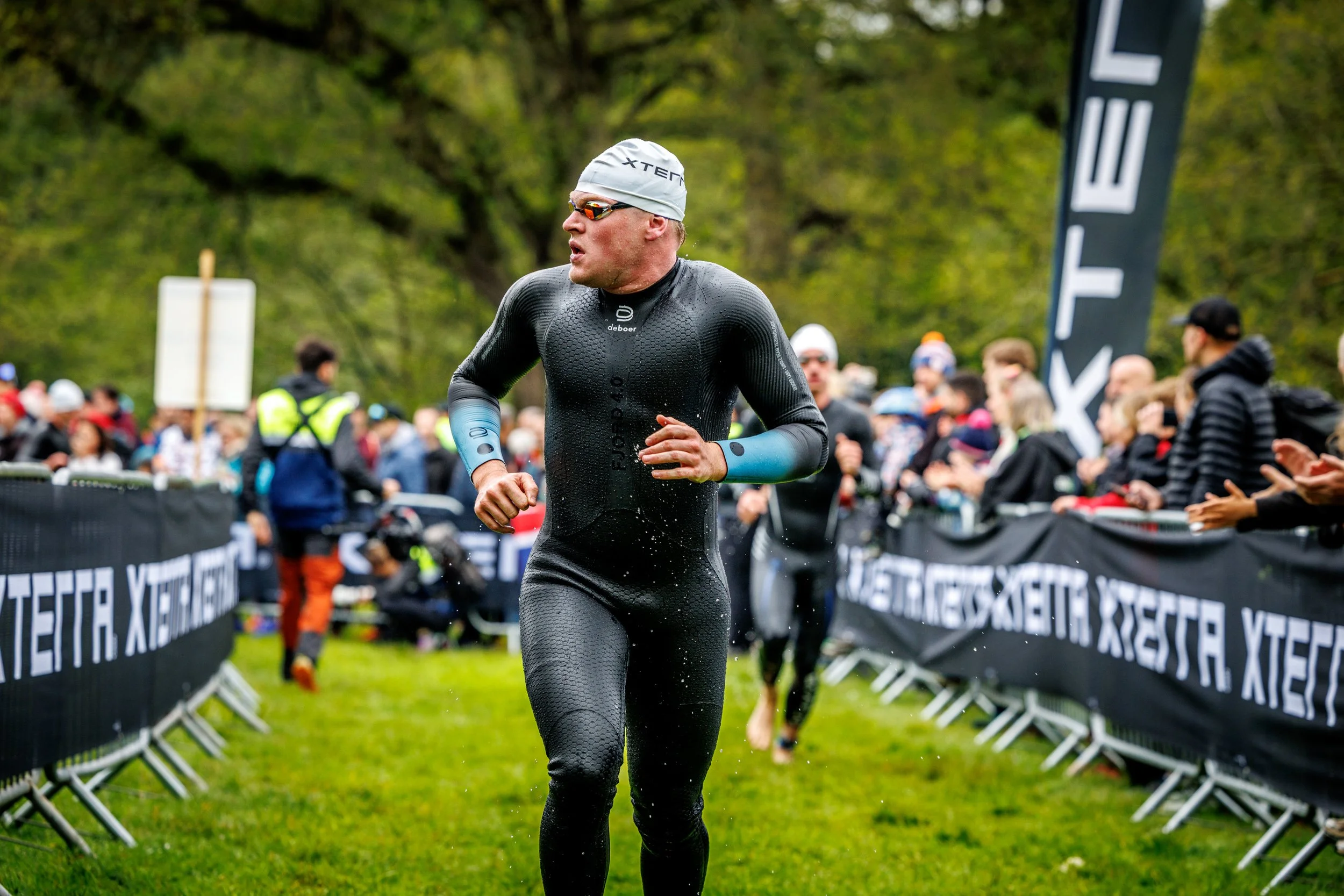
Beginner’s Guide to Triathlon Wetsuits
Choosing the right triathlon wetsuit can transform your swim. This beginner-friendly guide explains how wetsuits improve buoyancy, technique, and confidence in open water. Learn how to find the right fit, train effectively, and avoid common mistakes with practical advice from Frederick Webb Triathlon Coaching.
How to choose, use, and train in a wetsuit (without making the common mistakes)
If you’re new to triathlon, a wetsuit can feel like just another piece of gear to figure out. In reality, it’s one of the most important tools you’ll use—especially in open water.
But here’s the catch: a wetsuit won’t fix poor training habits. The best athletes use it as part of a structured, consistent approach, not a shortcut.
This guide will help you get it right from the start.
1. A wetsuit supports your training — it doesn’t replace it
One of the biggest beginner mistakes is relying on gear instead of building a plan.
A wetsuit:
Improves buoyancy
Helps you stay streamlined
Can make swimming feel easier
But it only works properly if you’re:
Training regularly
Following a structured plan
Practicing in realistic conditions
Think of it this way: the wetsuit amplifies good habits—it doesn’t create them.
2. Technique matters more than the wetsuit itself
A wetsuit can hide some flaws, but not all of them.
If your swim technique is inefficient:
You’ll still waste energy
You’ll still fatigue early
You may even fight against the suit
Focus on:
Body position (long and flat in the water)
Relaxed breathing
Smooth, controlled strokes
The best investment isn’t the most expensive wetsuit—it’s better technique.
3. You need to train in your wetsuit (not just race in it)
This is one of the most overlooked pieces of advice.
Swimming in a wetsuit feels different:
Tighter chest → breathing changes
Increased buoyancy → altered stroke timing
Restricted shoulders → fatigue in new ways
You should:
Practice regularly in your wetsuit
Include it in your weekly training plan
Use it in open water when possible
This is the “consistency beats perfection” principle in action.
4. Practice in real conditions (not just the pool)
Pool swimming and open water swimming are completely different.
A wetsuit is designed for:
Cold water
Waves
Limited visibility
Crowded starts
Train for:
Sighting (looking forward while swimming)
Swimming in a straight line
Staying calm in open water
Race day shouldn’t be your first real wetsuit experience.
5. Don’t let the wetsuit trick your pacing
Because a wetsuit makes swimming easier, beginners often:
Start too fast
Spike their heart rate
Burn out early
Instead:
Start controlled
Focus on rhythm
Keep effort steady
Remember: you still have the bike and run to go.
6. Think beyond the swim (triathlon is one race)
Your swim affects everything that comes after.
If you overwork in the water:
Your bike suffers
Your run becomes much harder
That’s why smart athletes:
Swim efficiently, not aggressively
Save energy for later stages
Practice swim-to-bike transitions
This is where structured training and “brick” thinking comes in—even for gear decisions.
7. Comfort and recovery matter more than speed
A good wetsuit should:
Fit snugly, but not restrict breathing
Allow shoulder movement
Prevent chafing
If it’s uncomfortable:
You’ll tense up
Your technique will break down
You’ll fatigue faster
Comfort leads to better performance—not the other way around.
8. Don’t ignore the basics: fueling & hydration still matter
Even though the swim is shorter than the bike/run:
You still need to be properly fueled
You still need hydration beforehand
A wetsuit increases body heat, so:
Avoid overheating before the race
Stay hydrated pre-swim
Good performance starts before you even enter the water.
9. Start simple — you don’t need the “best” wetsuit
For beginners:
You don’t need a top-tier suit
You don’t need advanced features
What you need:
Proper fit
Comfort
Reliability
Just like training, keep it simple and consistent.
10. The bottom line
A wetsuit is a powerful tool—but only if you use it properly.
The athletes who improve fastest are the ones who:
Train consistently
Practice in real conditions
Focus on technique
Pace themselves intelligently
The wetsuit helps—but your habits matter more.
Quick beginner checklist
Before race day, make sure you:
Have trained in your wetsuit multiple times
Feel comfortable breathing in it
Can swim at a steady pace (not sprinting)
Have practiced in open water
Know how to take it off quickly in transition